
Think · Build · Belong

Why
Wellsprings.

Choosing a school takes time. Your child is taught as a whole person here — mind, body and heart. These are the things we work on through the year, and the things you can look for when you come and see us.

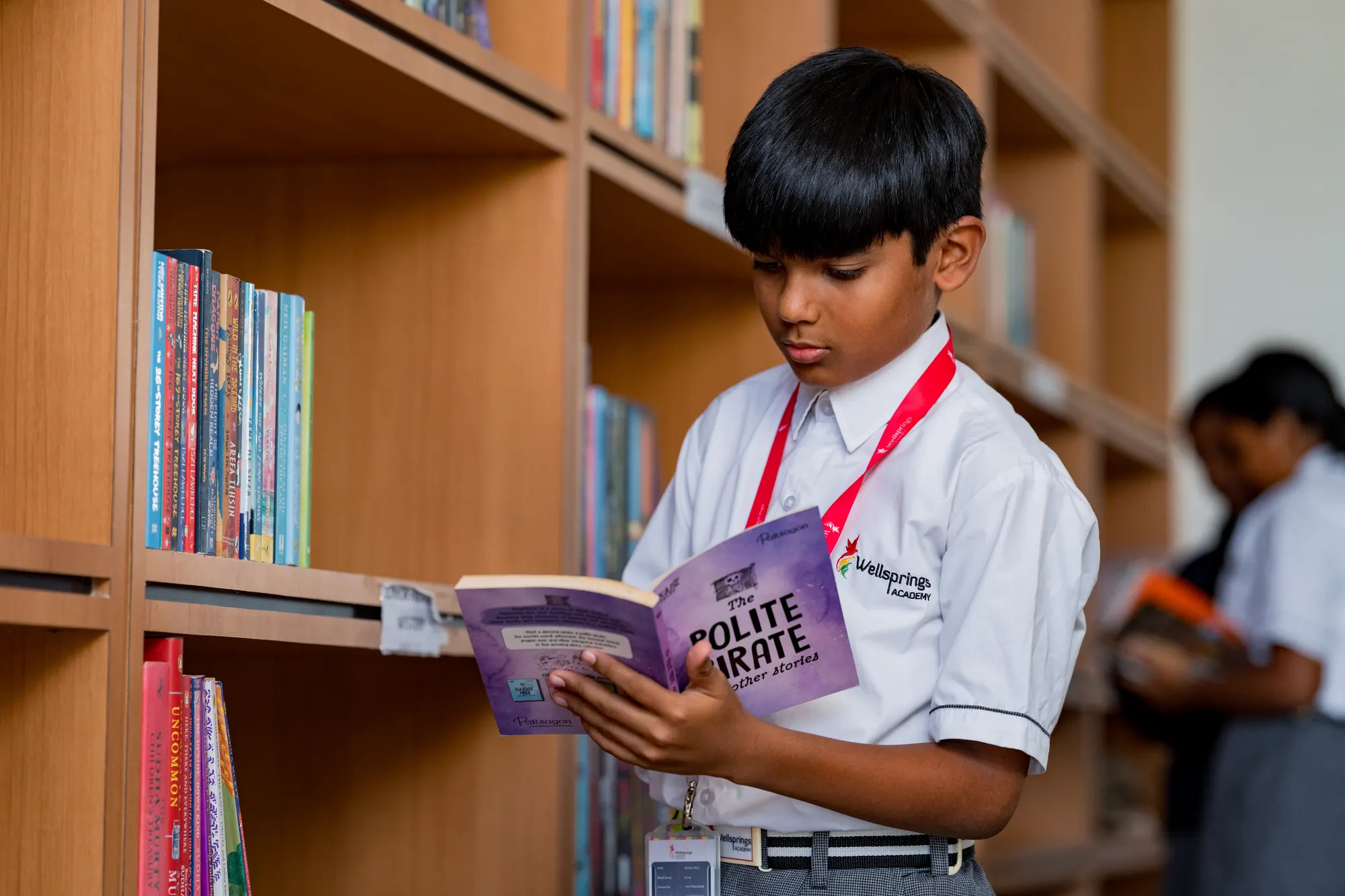
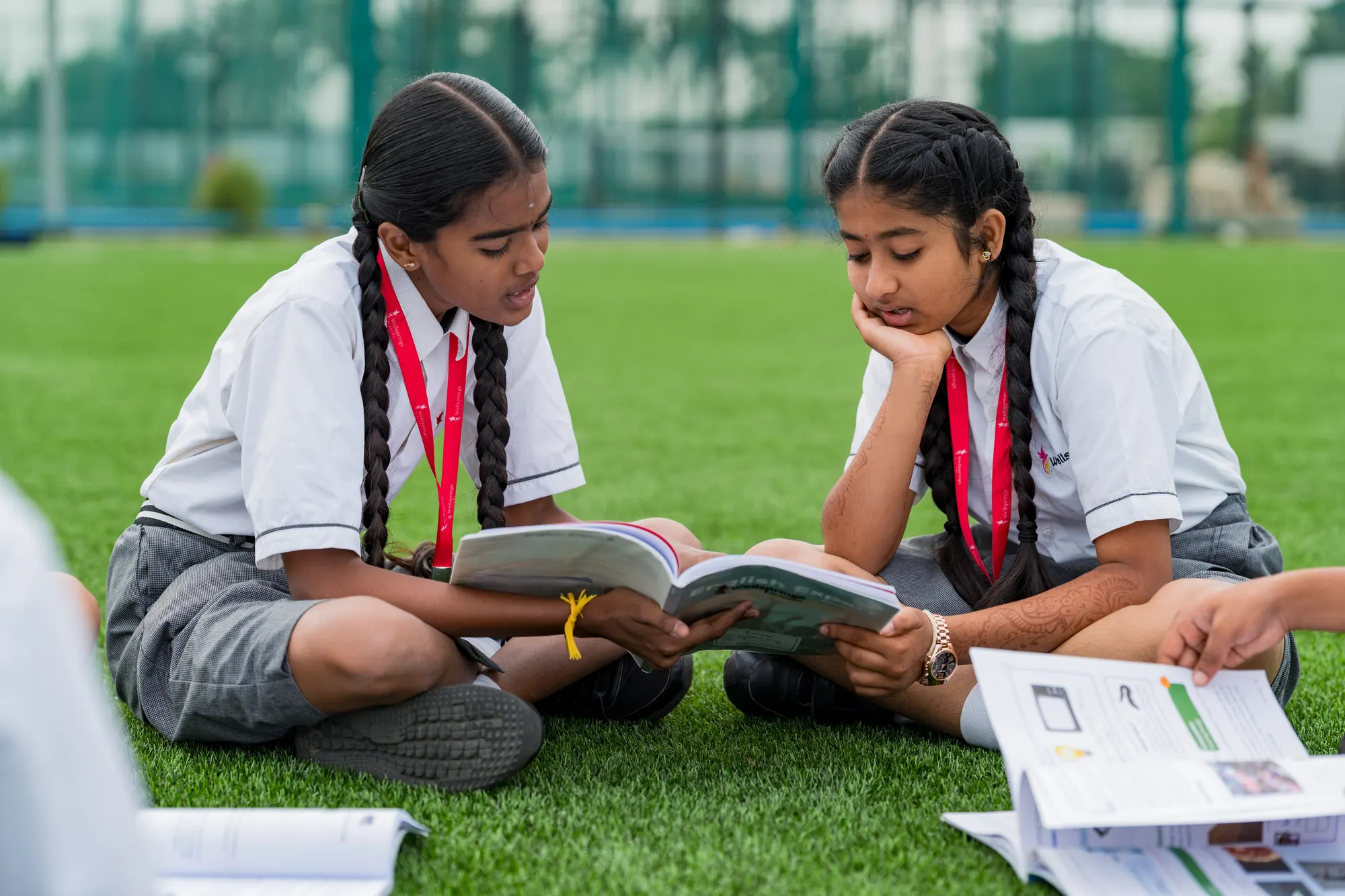
A Wellsprings child reading during a morning class
ThinkReading block, late morning.
What we work on

Six sections, three dimensions.

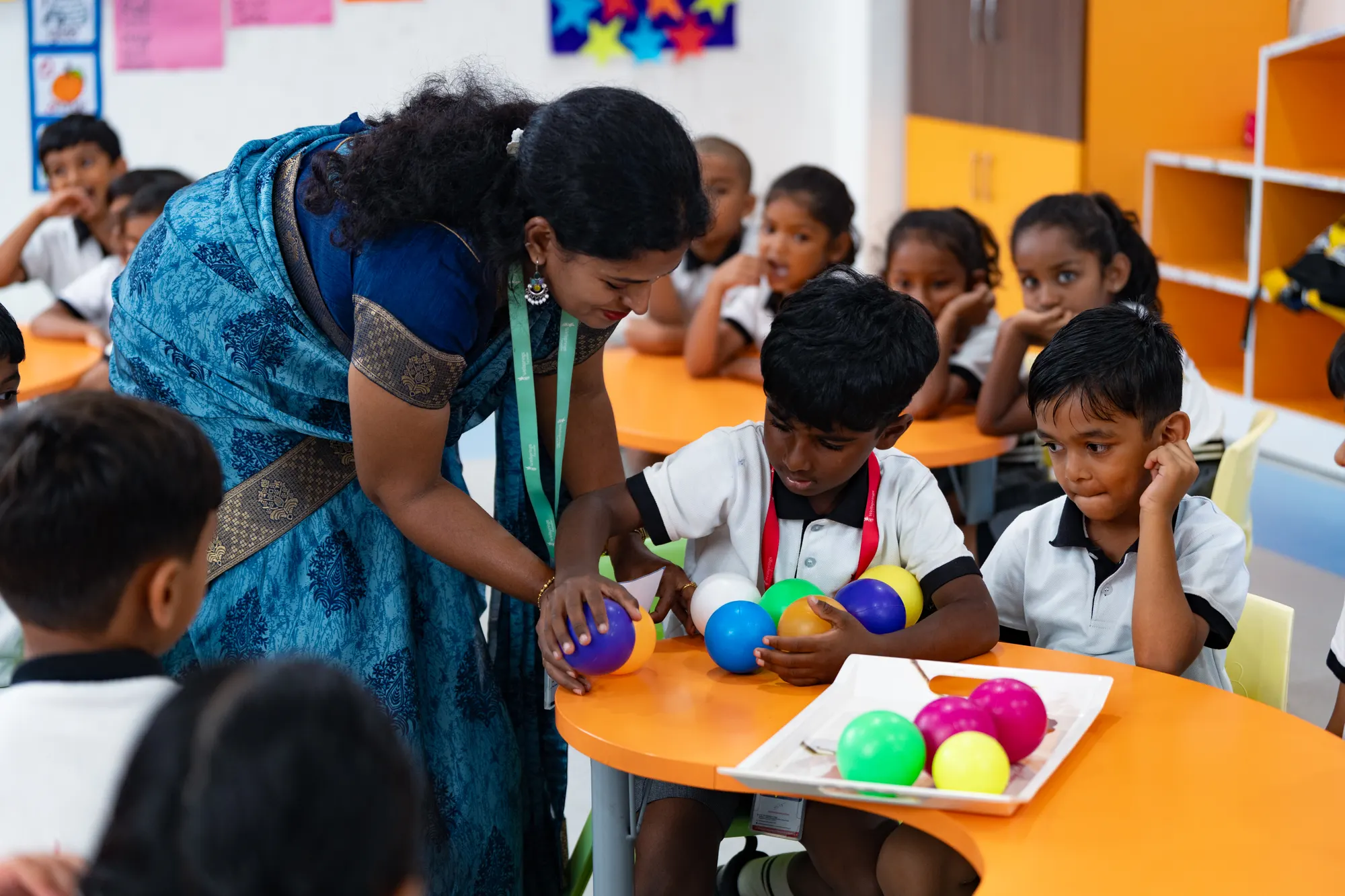
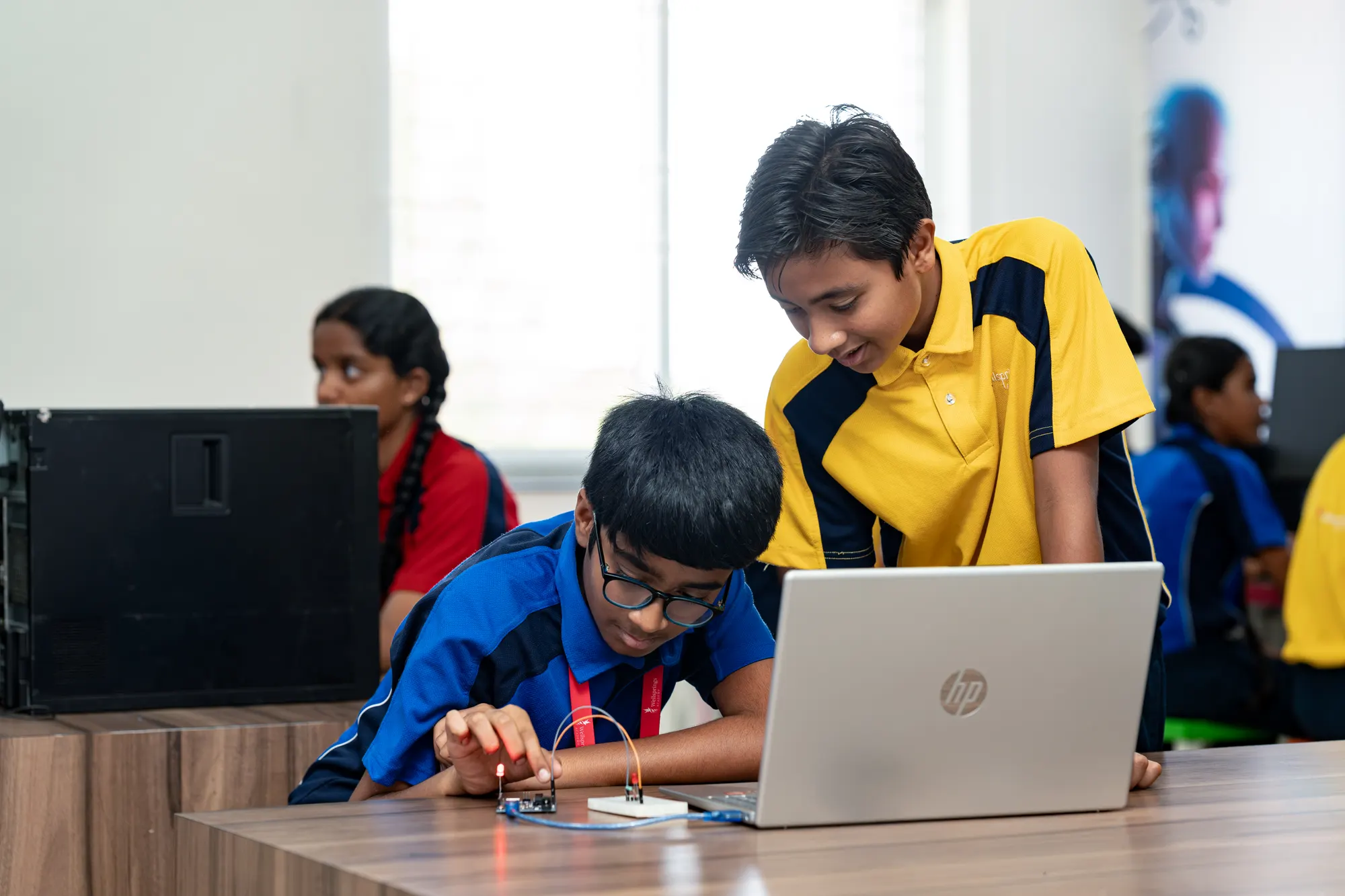
Children working through a problem together in a Wellsprings classroom
Board
CBSE
Class ratio
15:1
Reports
Twice a term
Parent meetings
Every quarter
Extra help
Special educator and remedial classes
Library
Once a week
Think

Academic excellence

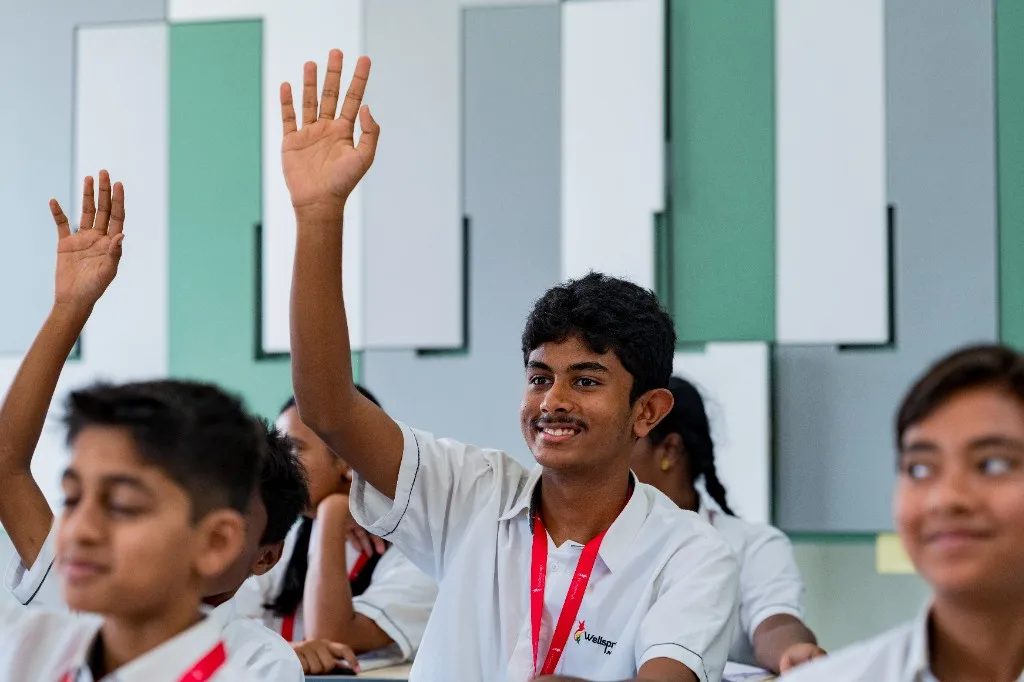
A question comes before the answer.

We follow the CBSE curriculum, affiliation number 831719, from the early years through to the board grades. We teach it by asking children what they notice before telling them what to know.

Fifteen children to a teacher, so nobody drifts through a lesson unnoticed. Languages, science, mathematics and social science taught by teachers who know those subjects, and arts and sport taught by specialists rather than whoever is free that period.

Four times a year you get a written account of your child — what they are doing well, what they find hard, and what we are doing about it. It comes as a holistic progress card, not a rank.

Children who want to go further can take Olympiads in five subjects. For children with special needs there is a special educator and regular remedial support — extra time and a different way in, not a label.

A Wellsprings child building at the maker table
Science labs
Four
STEAM lab
Yes
Maker space
Real tools
Vocational work
From Grade 6
Build

Learning by making

Some things cannot be learned sitting down.

There is a STEAM lab where children design, build, test and rebuild. Four science laboratories where experiments are run rather than read about. A maker space with real tools and real materials.

From Grade 6, children take vocational skill classes — growing food without soil, carpentry, wiring something that switches on, auditing the school’s own water use. Most of the marks come from the work itself, not from a written test.

Not everything comes out of a textbook. Some of what children build works, some of it falls apart, and the second kind usually teaches more.

See Beyond Books
Children at a Wellsprings activity session on the grounds
Sports coached
Ten
Arts
Art, music, dance, drama
Speaking
In front of an audience
Clubs
Chosen by the children
Field trips
Through the year
Stayovers
One a year
Build

Beyond the classroom

In the timetable, not after it.

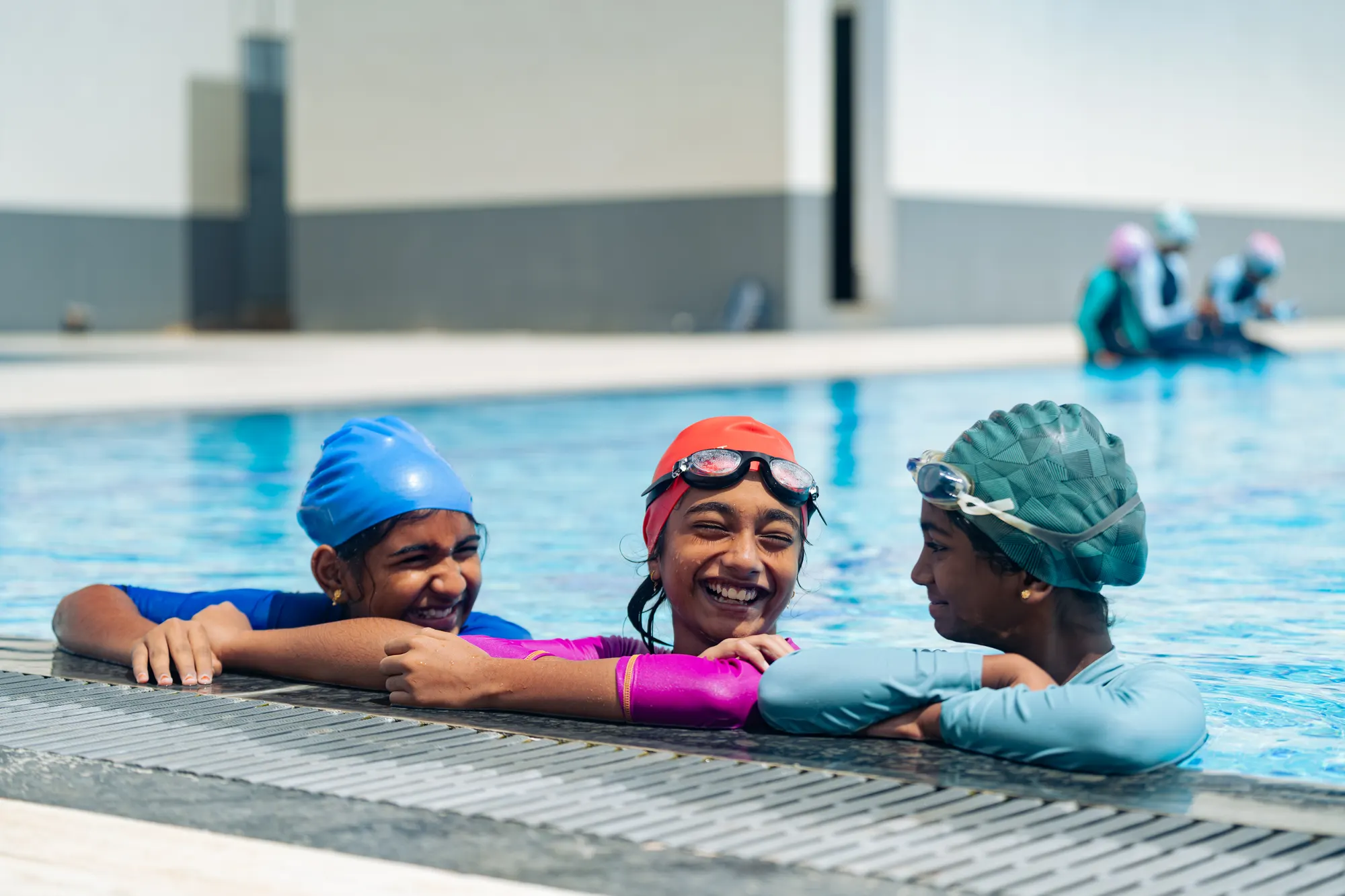
Sport runs five periods a week in the early grades and four from Grade 3. Ten coached games — basketball, football, cricket, swimming, skating, taekwondo, gymnastics, chess, yoga and athletics.

The arts get the same seriousness. Art and craft, singing, keyboard, guitar and drums, dance and theatre, all with specialist teachers. Public speaking puts children in front of an audience often enough that it stops being frightening.

Clubs are chosen by the children. Field visits run through the year, and each year group spends a night on campus — independence, teamwork outside regular hours, and a memory that stays.

See Beyond Books
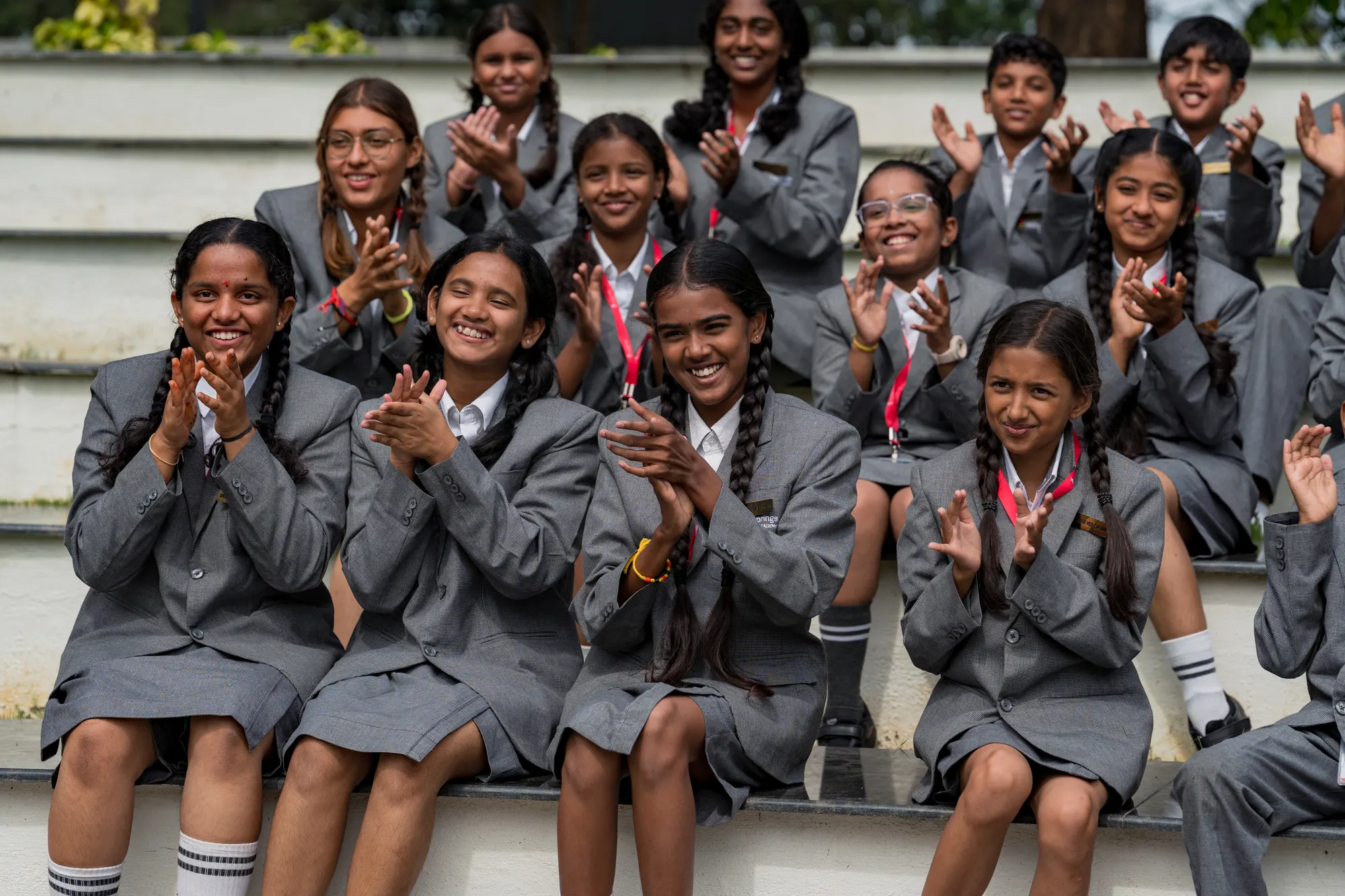
Children sitting together at the end of a school day
Mentor
One, all year
Behaviour counsellor
A trained psychologist
First days
The Settlers Room
Class teacher
Knows your child
Belong

Emotional wellbeing

A child settles before they learn.

A child who is anxious does not learn much. A child who dreads Monday does not do their best work on Tuesday.

Every child has a mentor through the year — someone whose job is to know how your child is, not only what they scored. And a class teacher close enough to notice when something has changed.

There is also a behaviour counsellor on campus, a trained psychologist who works with children on the things that are harder to name. Exam nerves. A friendship that has gone wrong. Anger that arrives faster than a child can manage it. She also runs group sessions on resilience and coping, and meets parents who want to talk something through.

Much of the work is early. Spotting a change in a child before it becomes a problem is easier than fixing it afterwards.

In the early years, no child is made to walk into class on the first mornings. There is a quiet room with soft music, toys to sit with, and a teacher who stays. They go in when they are ready — some in ten minutes, some after a fortnight.

Your child should want to come back tomorrow. That is the test we hold ourselves to.

A Wellsprings teacher listening to a child during morning circle
Where it shows
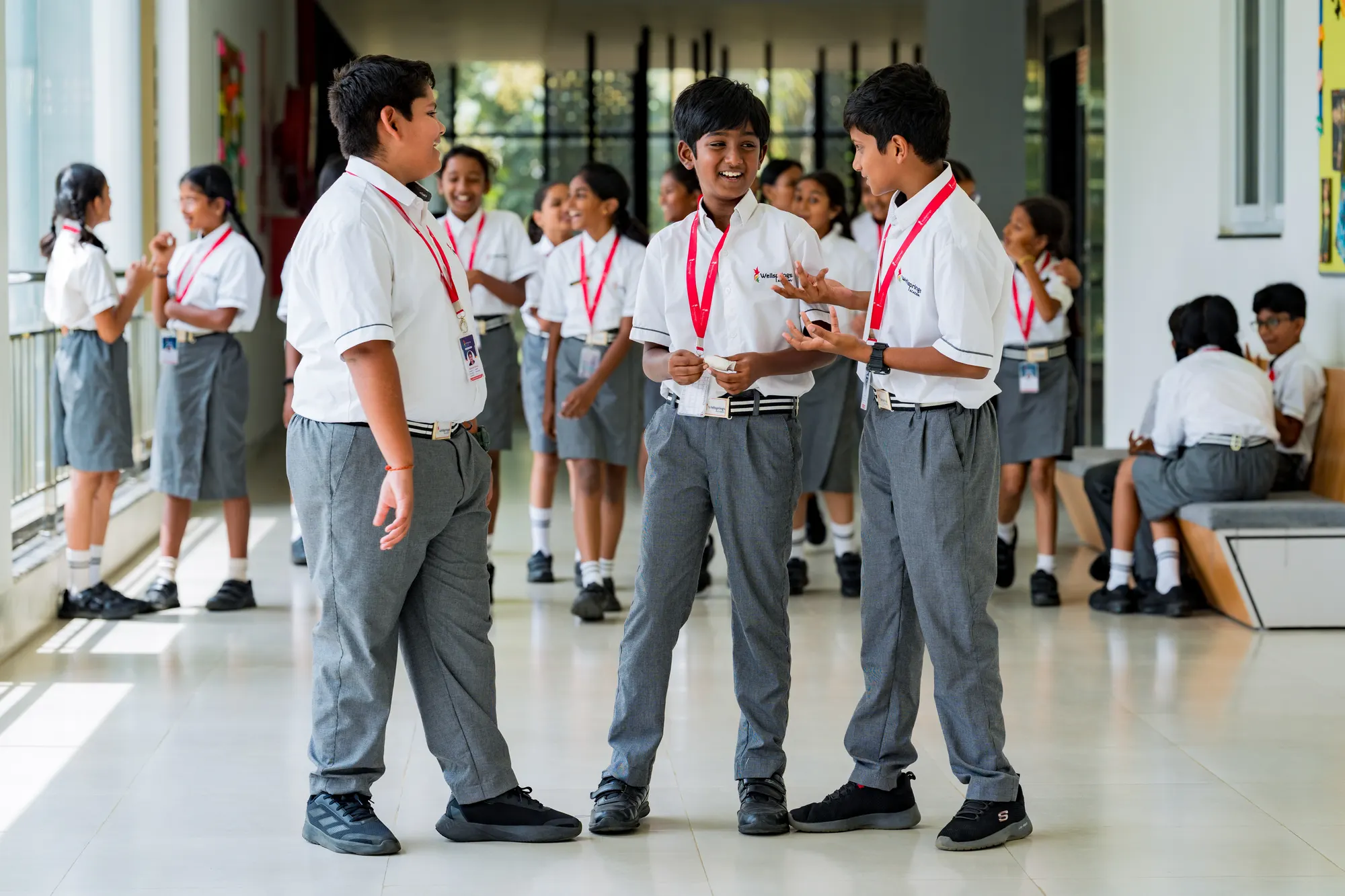
Mixed lunch tables, older children helping younger ones
How we mark it
We do not. We watch for it.
What we look for
A child who helps without being asked
Belong

Values-led education

The things a report card cannot measure.

An education that does not teach a child how to treat people has only done half the job.

Kindness · Respect · Empathy · Helpfulness · Compassion.

Noticing when someone is left out. Telling the truth when it costs something. Being patient with someone slower than you. Not only towards family and friends, but towards people a child will never be graded on being kind to.

A child who understands their own feelings and respects other people’s carries that for life, well beyond any exam.

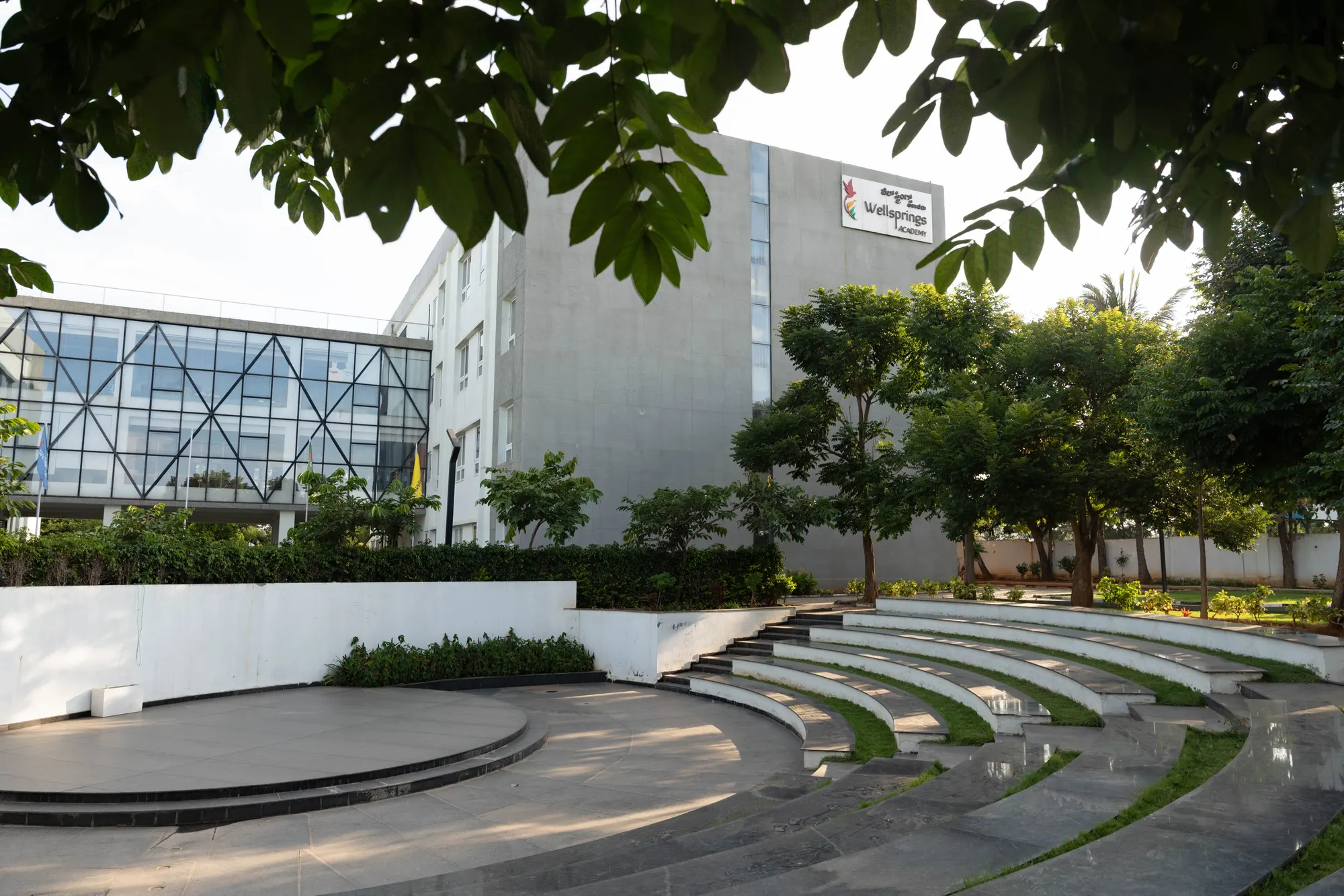
The Wellsprings campus on a school morning
Campus
10 acres
Buses
GPS, attendant on board
Entry
Controlled, CCTV
Cafeteria
On campus
Infirmary
4 beds, nurse
Pool
On campus
The campus

Where all of it happens

Ten acres, and space to be a child.

Classrooms, four science laboratories, a STEAM lab, a maker space and a library every class visits weekly. A swimming pool, playing fields and courts.

Every bus carries a driver and a uniformed attendant, with GPS on every route and evacuation drills twice a year. Entry to the campus is controlled, with CCTV throughout and staff checked before they meet a child. Breakfast, a mid-morning break and lunch are cooked here. There is a four-bed infirmary with a qualified nurse.

And one app carries the school day to you — lessons, homework, attendance, reports, fees and notices, updating as the day goes.

See the campus
Talk to us

Schedule a campus visit.

Pick a time that suits you.

Talk to admissions
Call