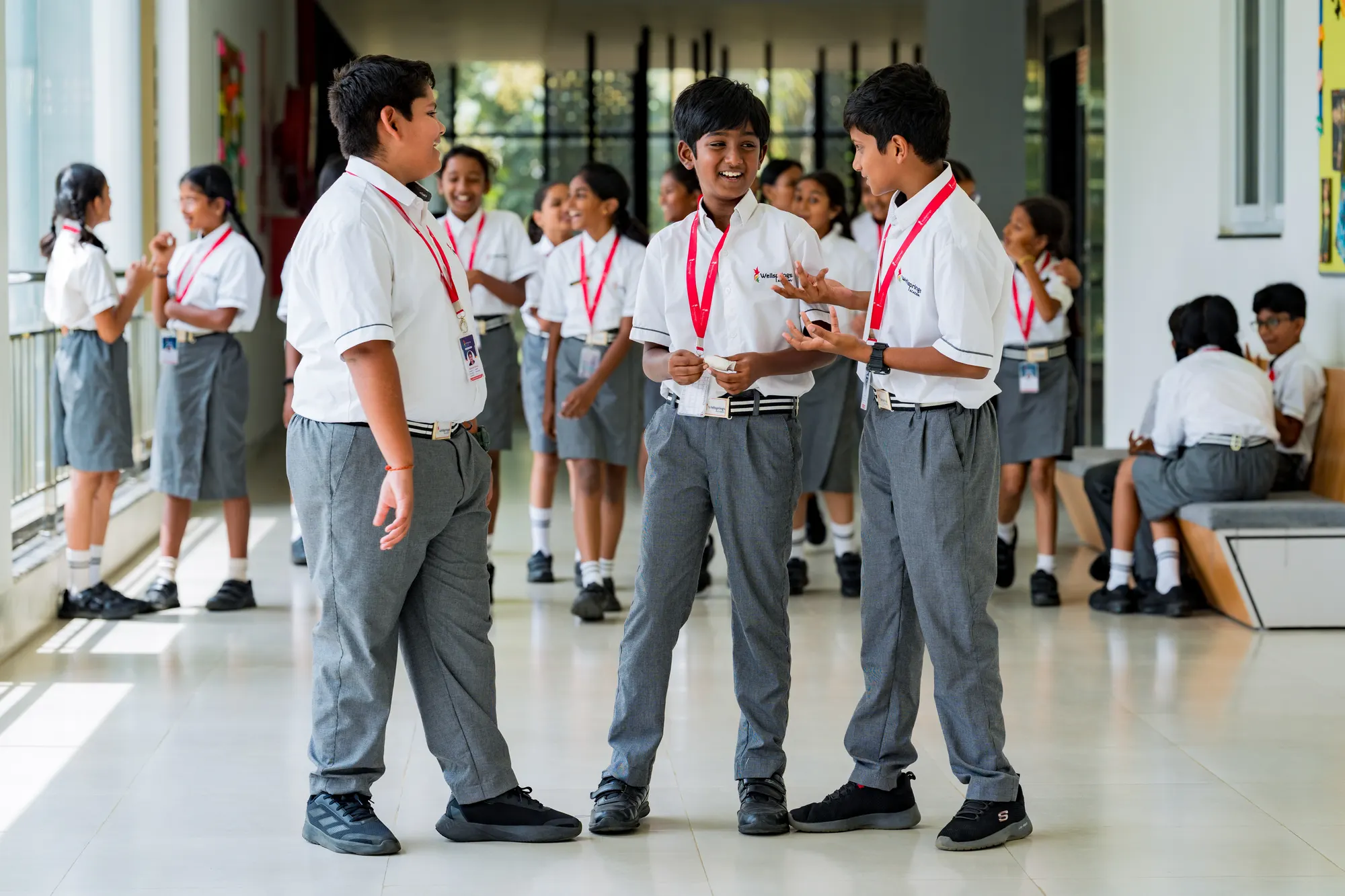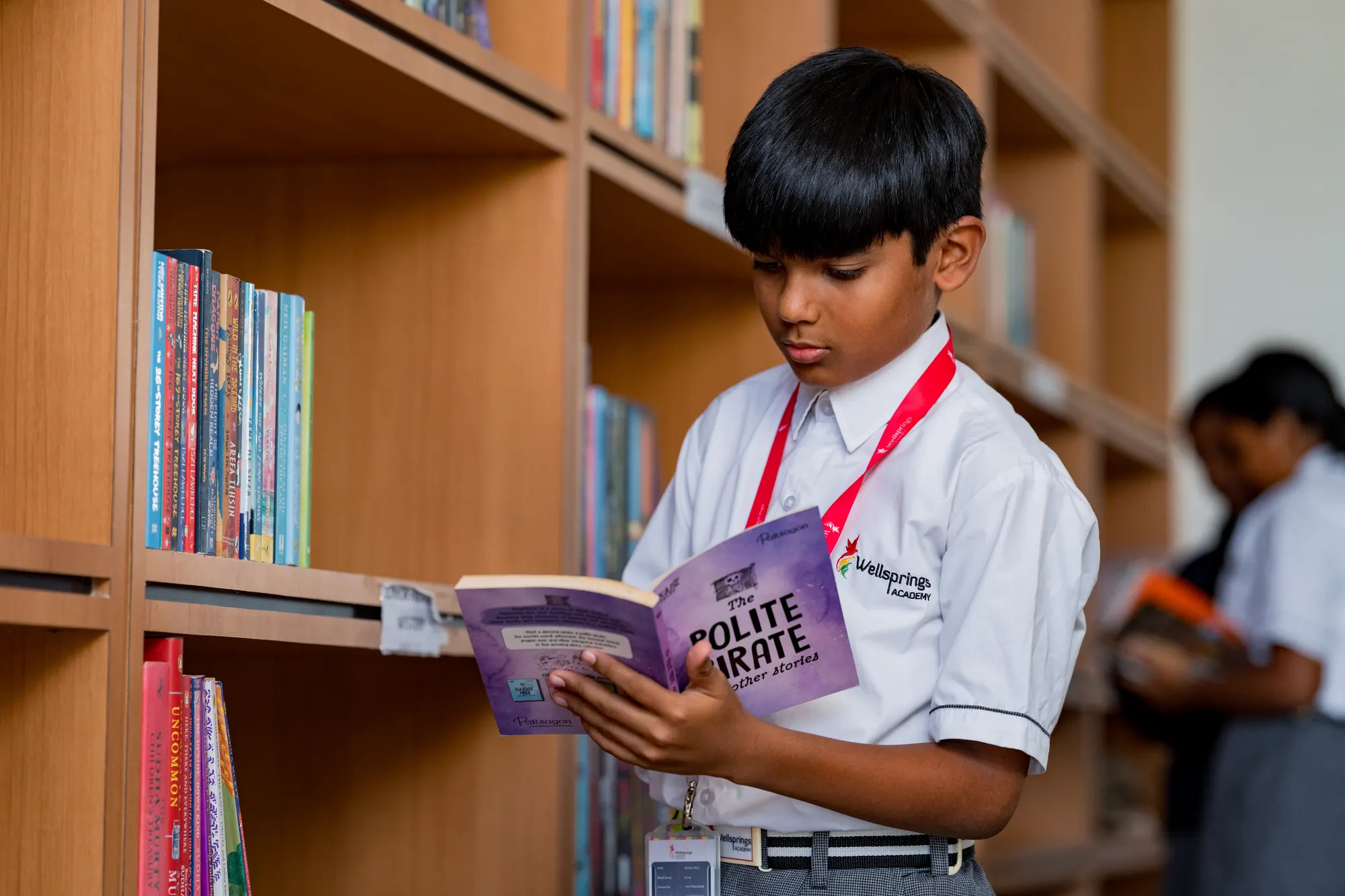
Learning does notstop at theclassroom door.
Sport, the arts, making things, speaking in front of people, looking after a garden. None of it is an extra here. It is timetabled, and taught by specialists.
Our promise to your child
Think·Build·Belong
In the timetable, not after it.
Children are coached rather than supervised. They learn to warm up properly, to play a position, to lose a match and come back the next week.
- PE periods
- Five a week early on, four from Grade 3
- Teams
- Play other schools through the year
- Facilities
- Pool, playing fields, courts
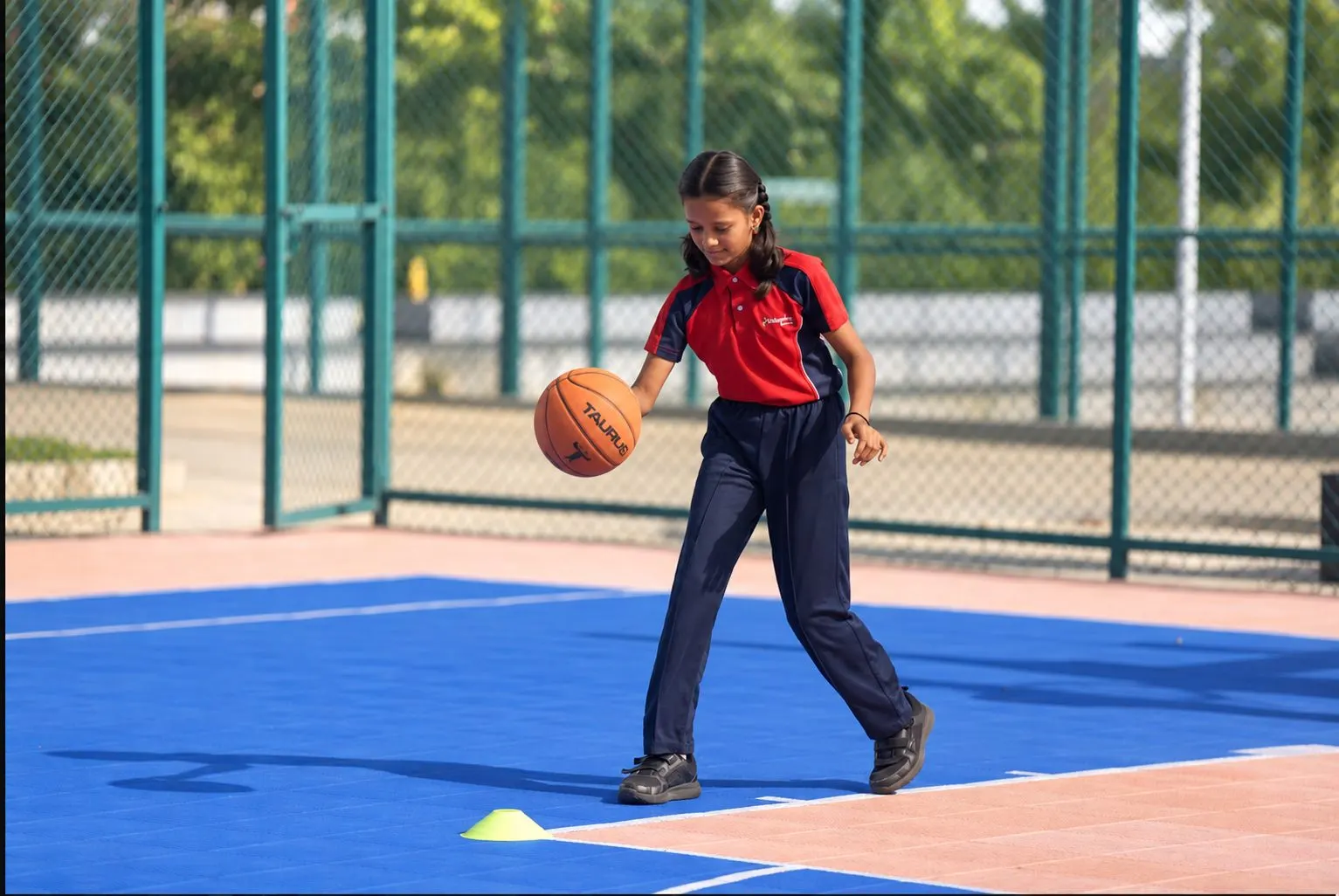
Basketball
Coached weekly, with inter-school teams.
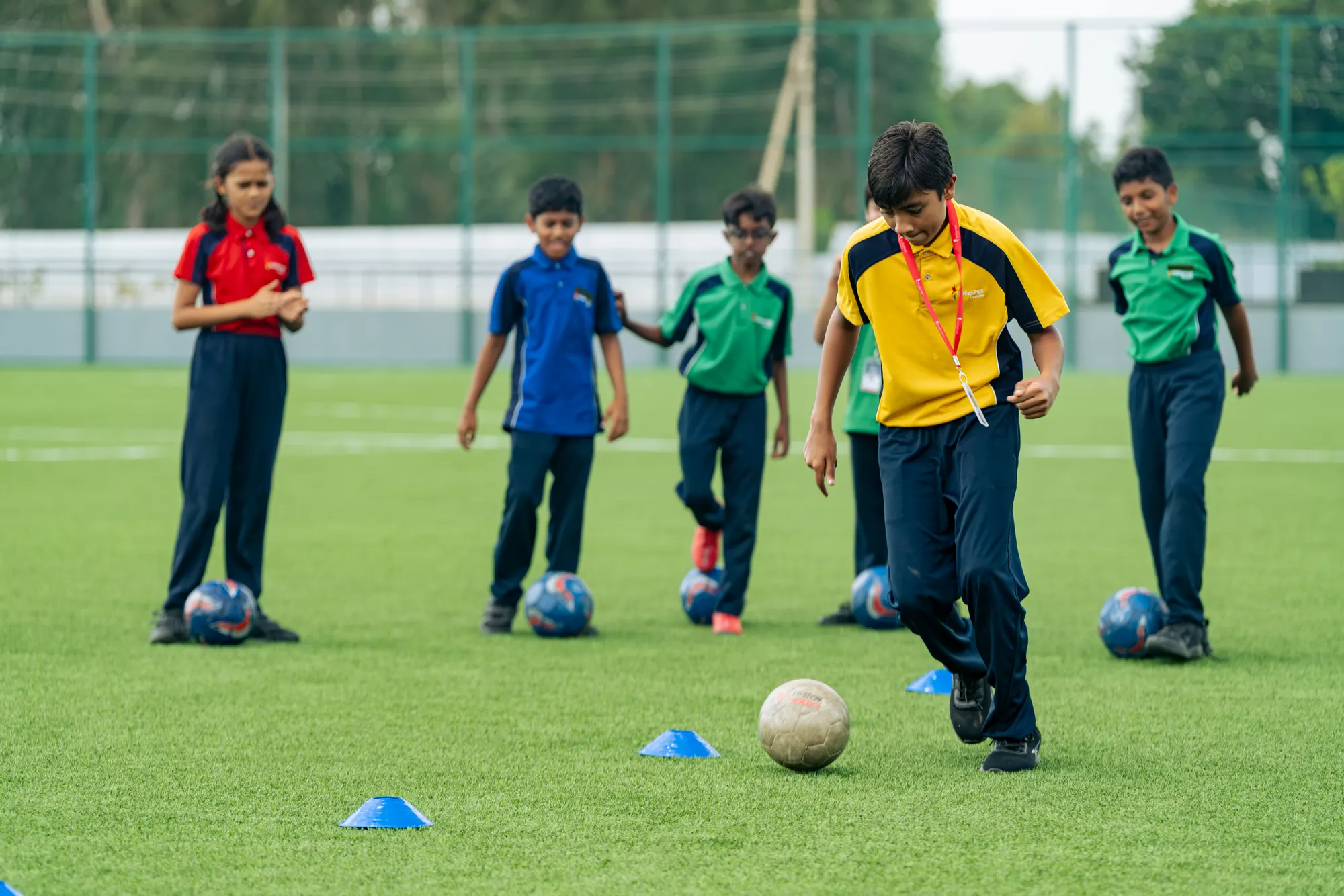
Football
Skills, small games and school matches.
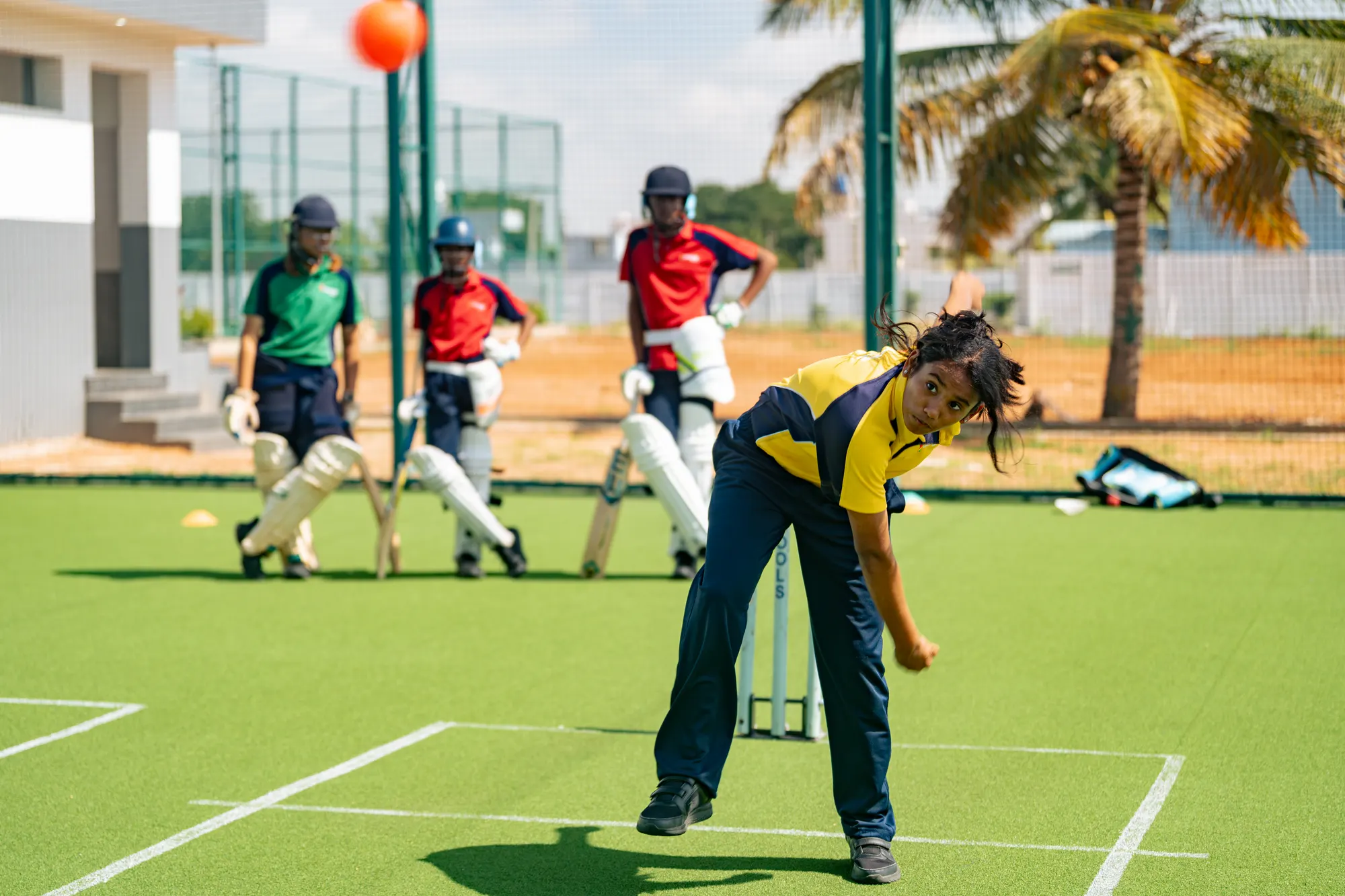
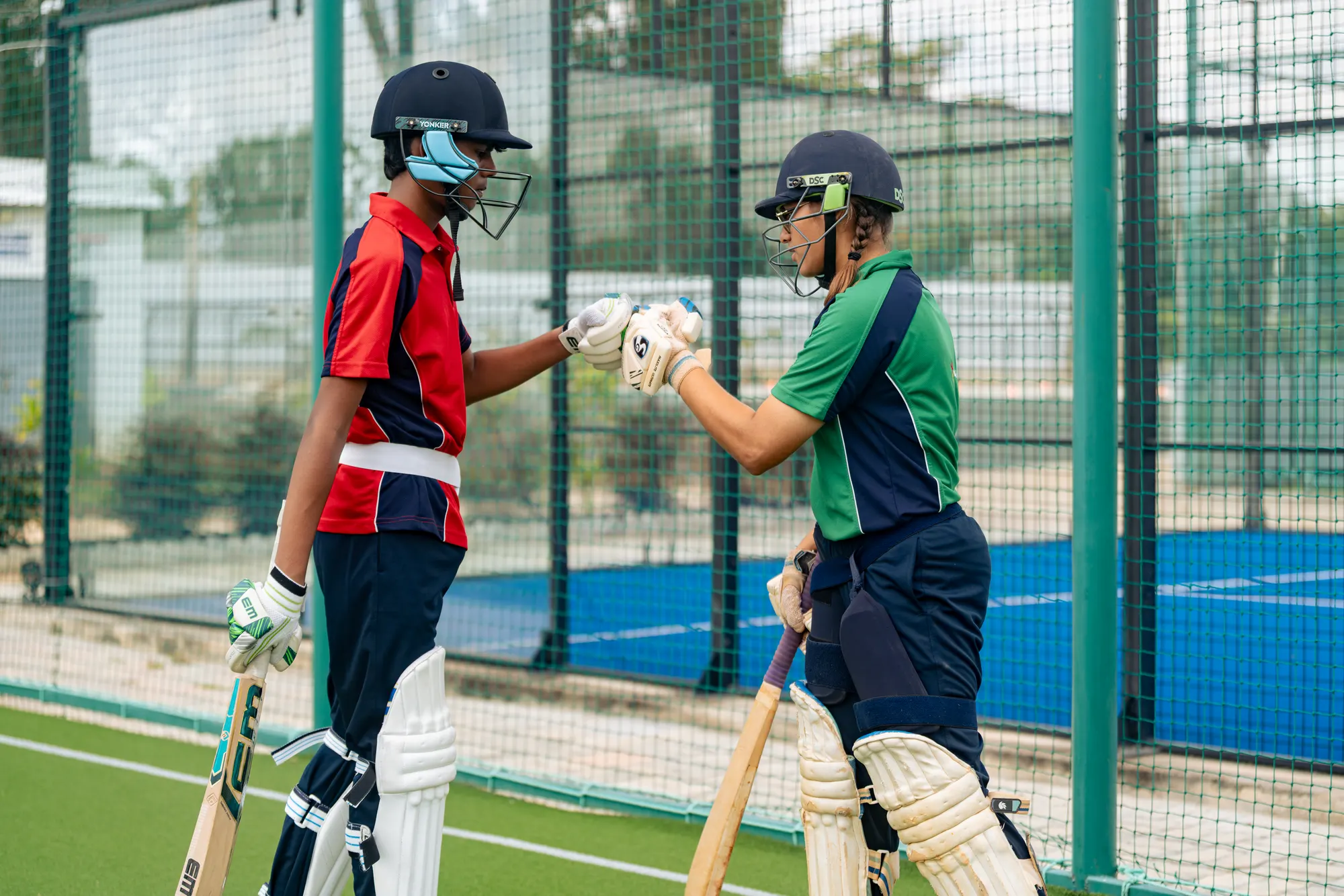
Cricket
Batting, bowling and fielding, taught with patience.
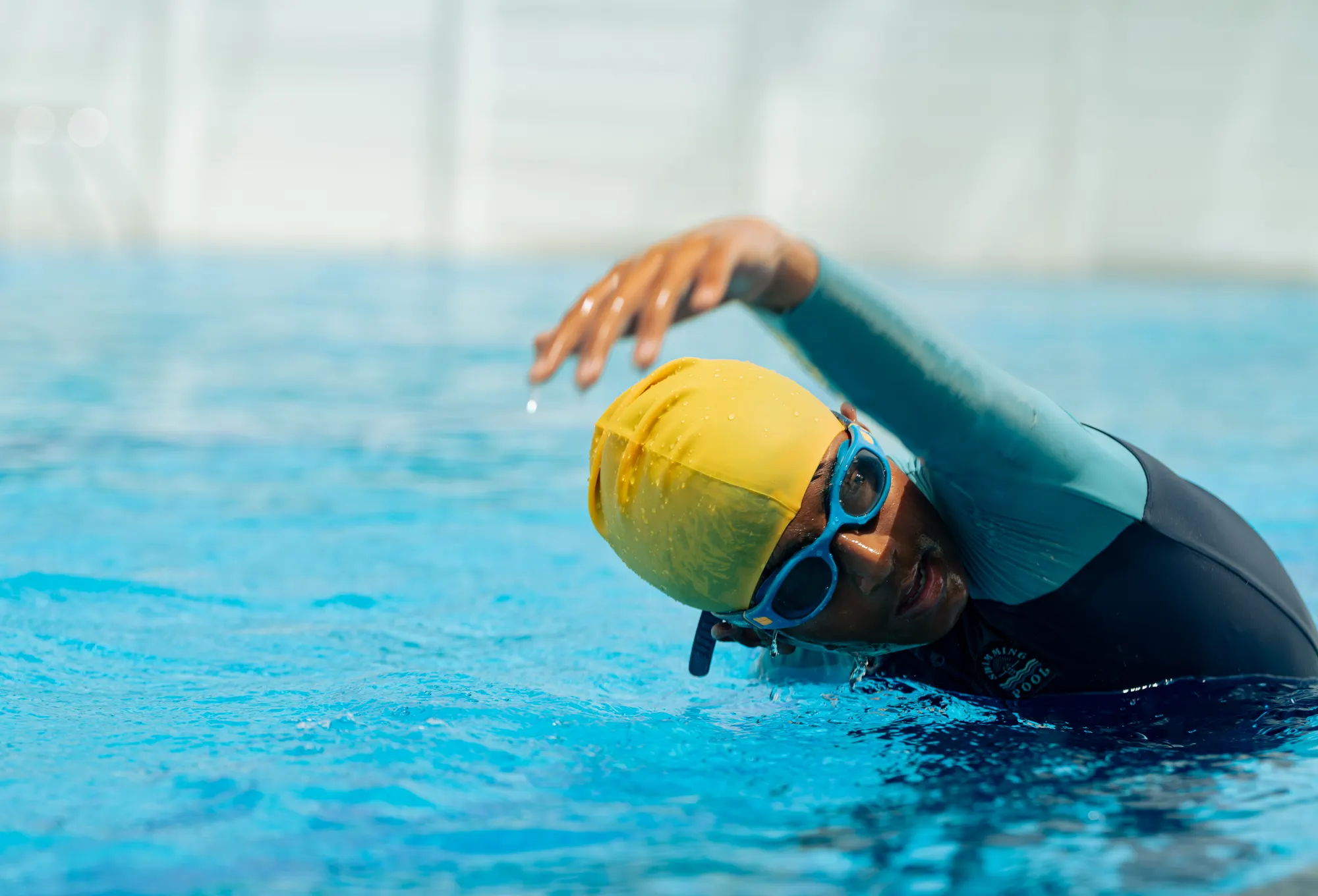
Swimming
Pool sessions through the year, safety built in.
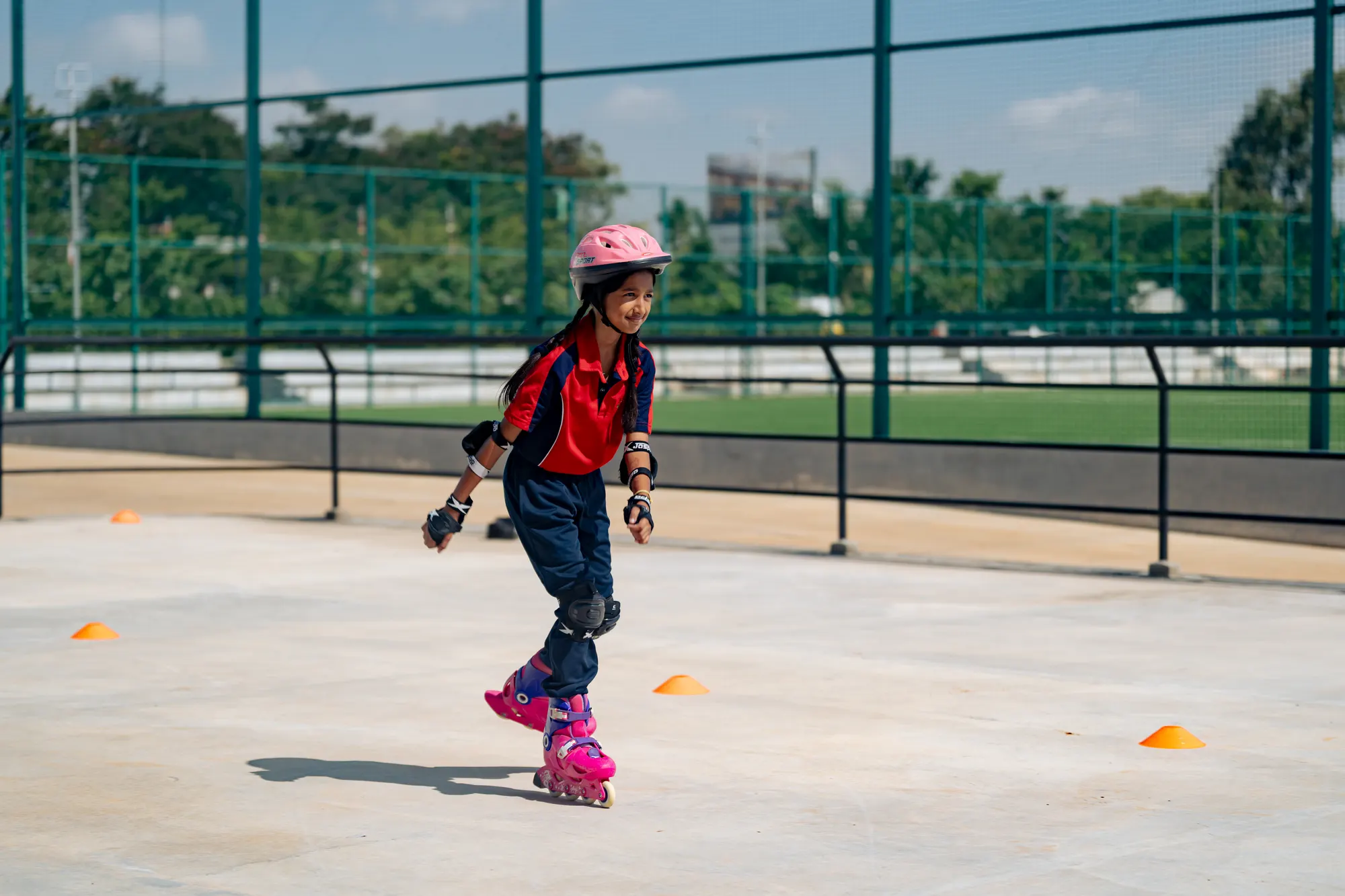
Skating
Balance and confidence on wheels.
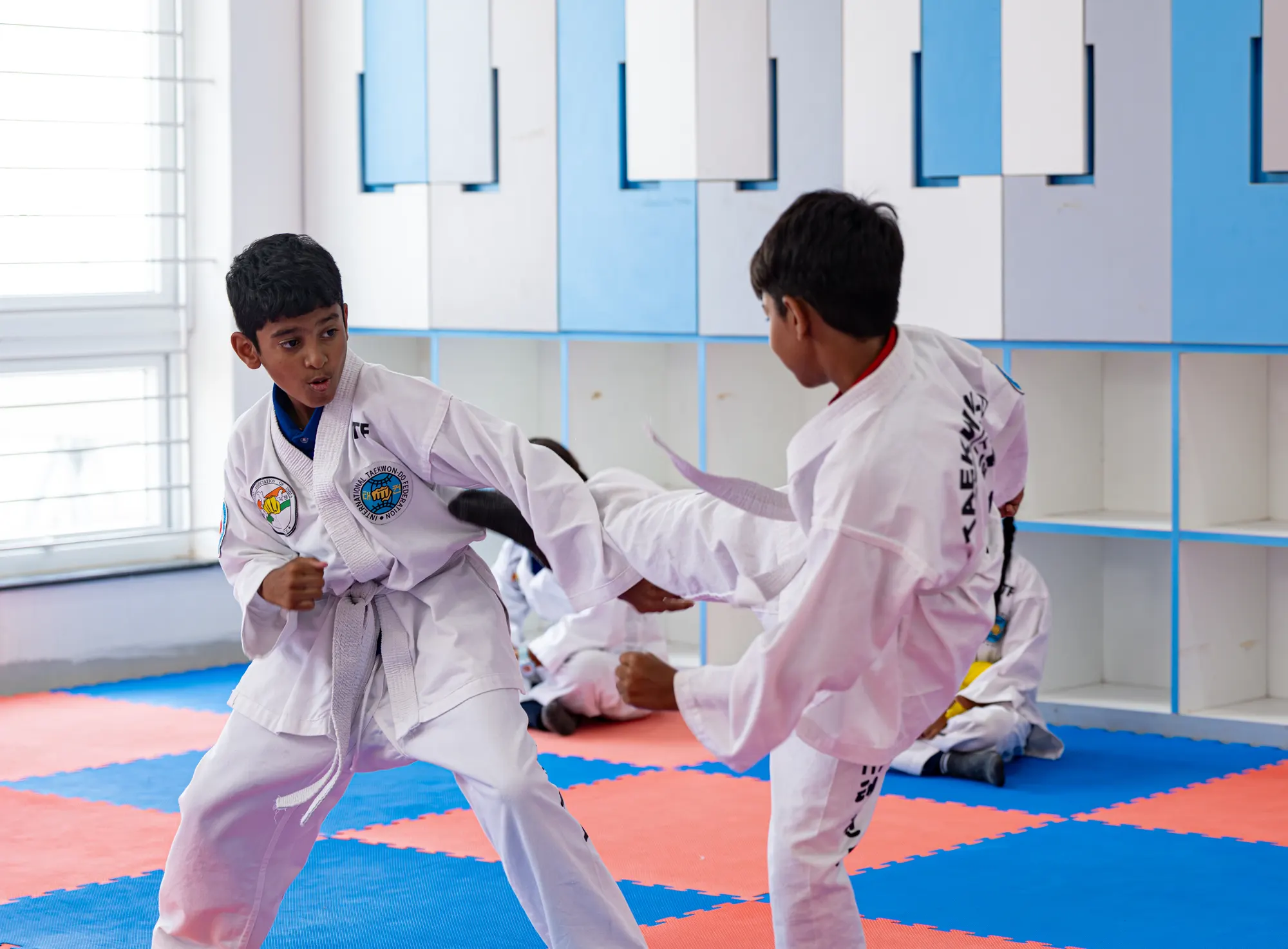
Taekwondo
Discipline, focus and respect on the mat.
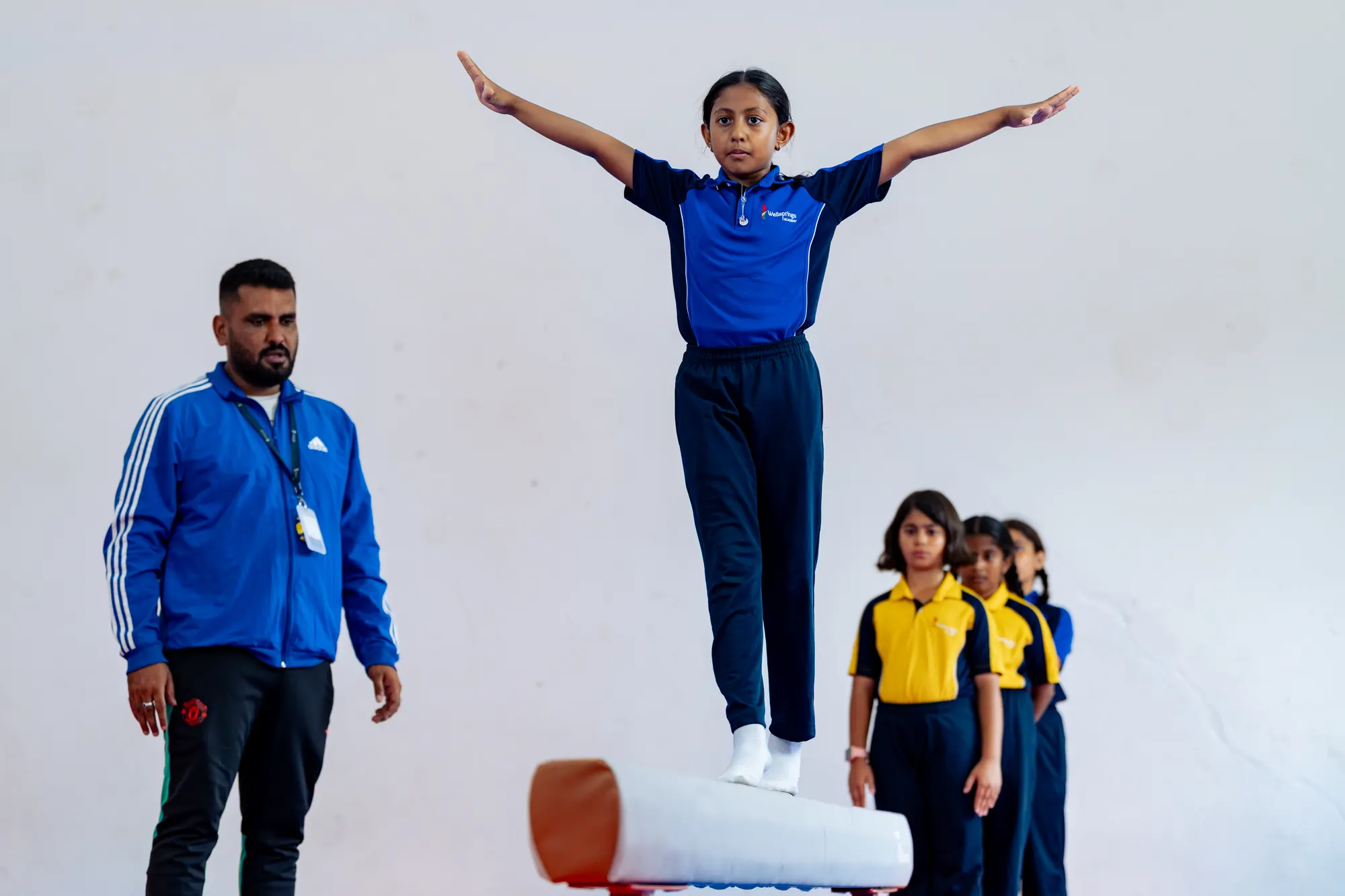
Gymnastics
Strength and body awareness, in proper progressions.
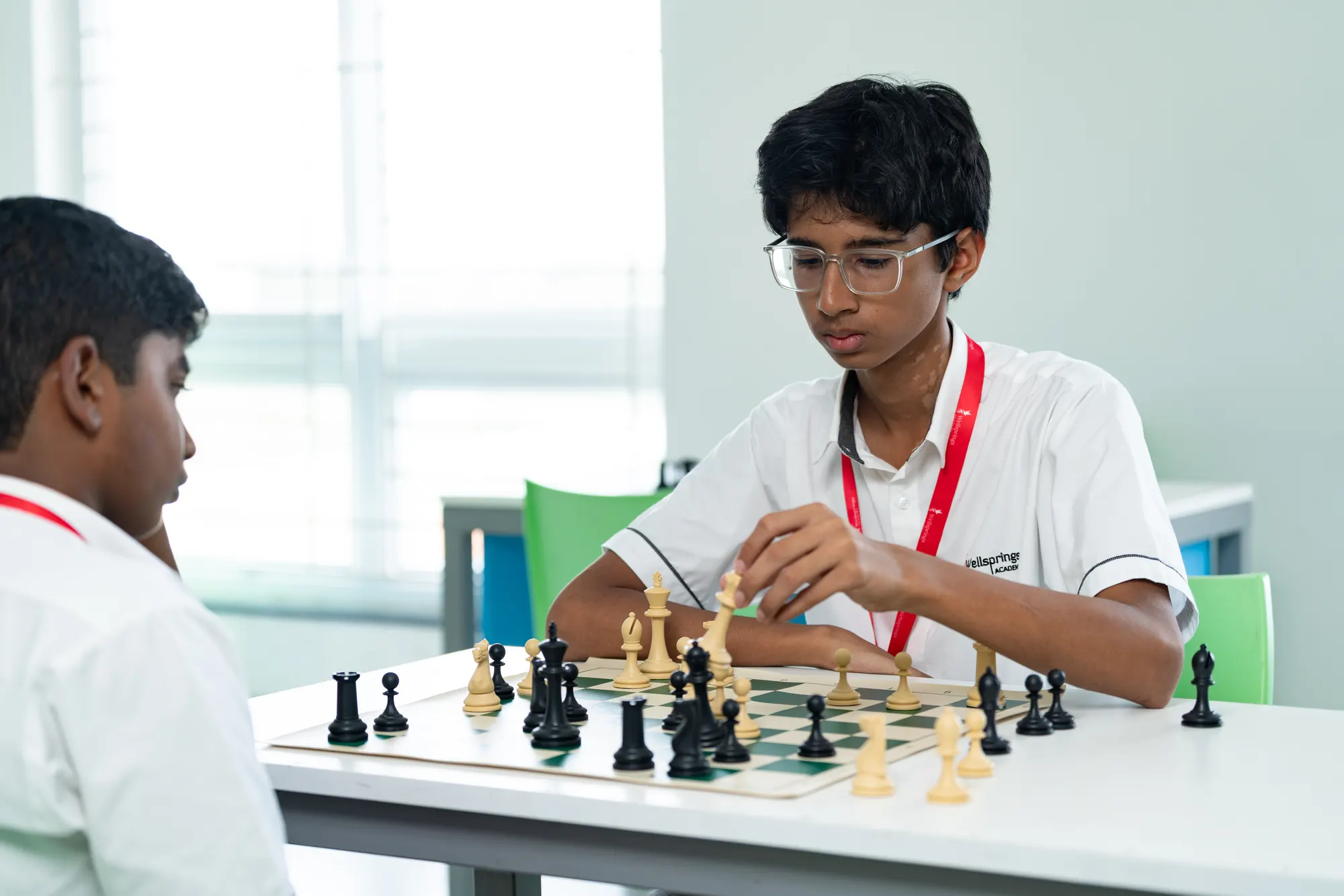
Chess
Quiet thinking, real stakes, inter-school play.
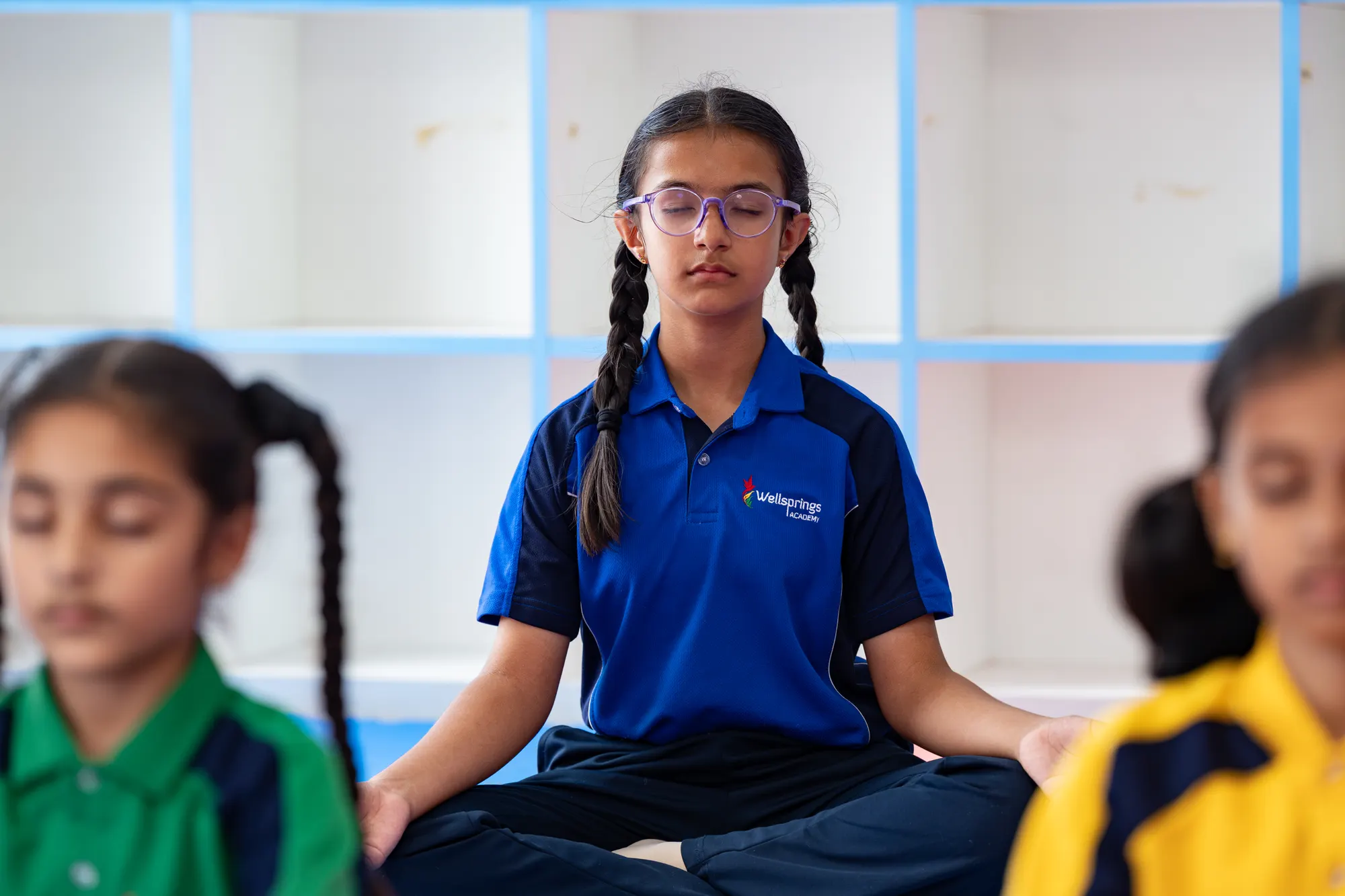
Yoga
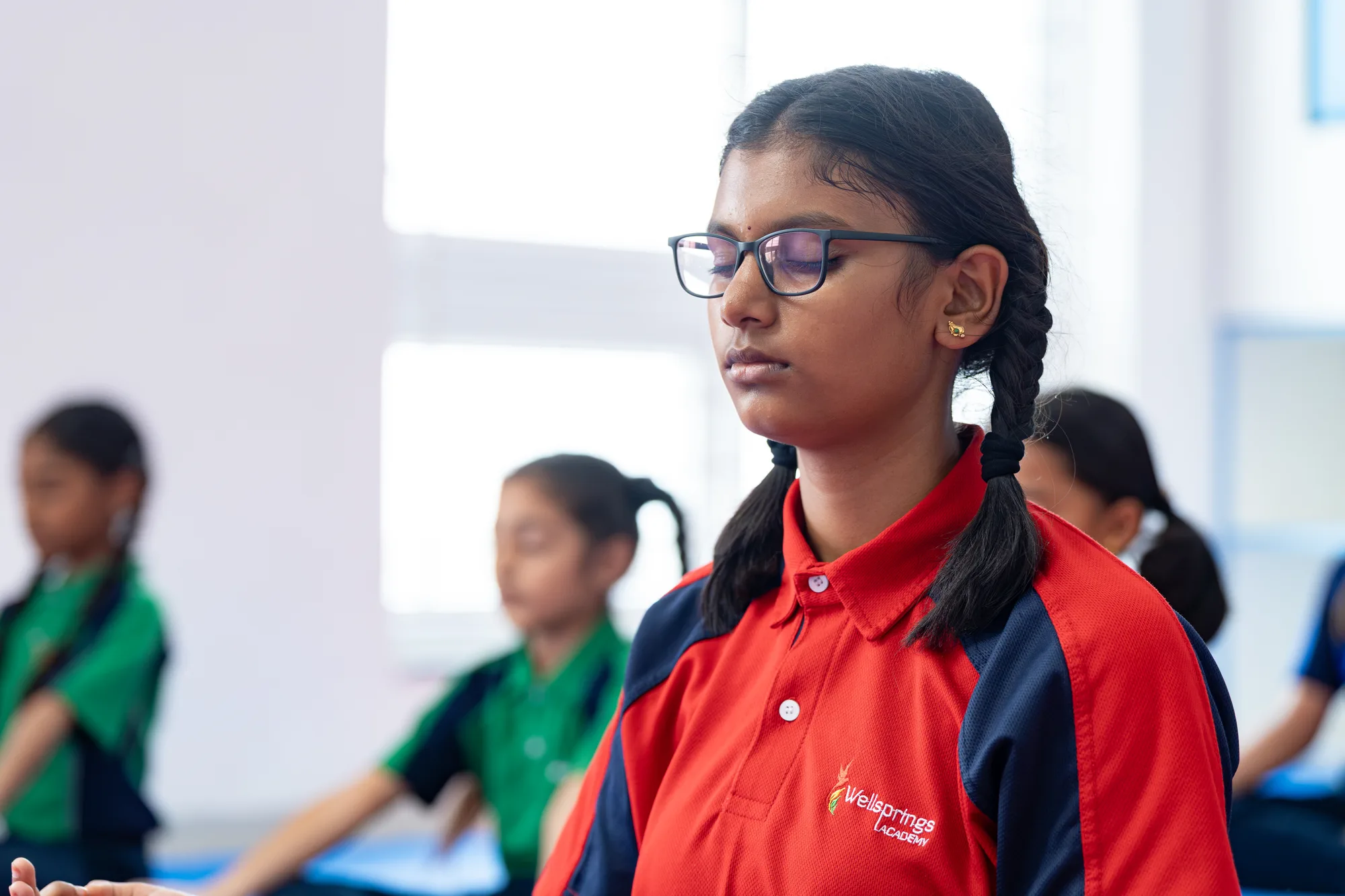
Breath, balance and stillness through the week.
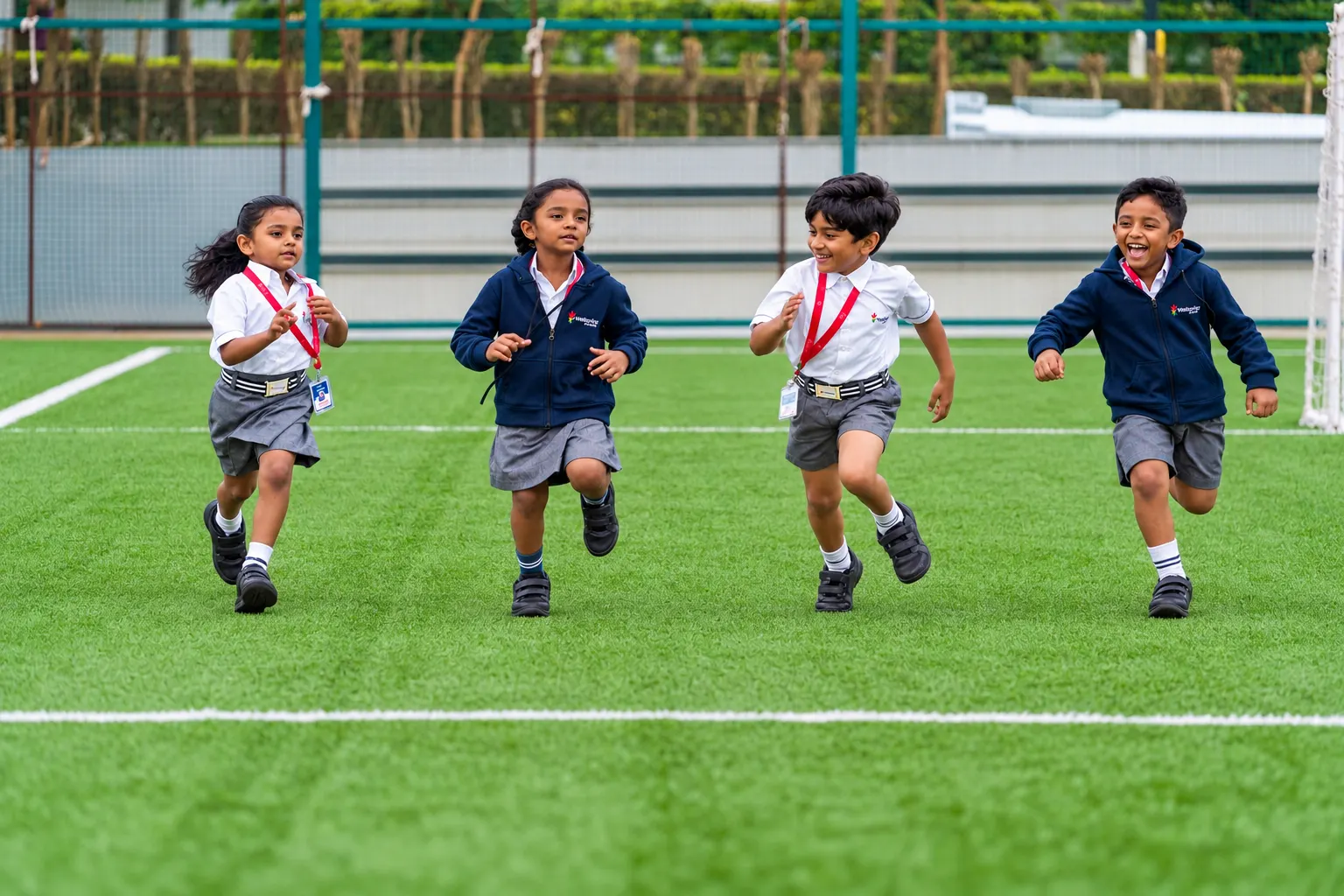
Athletics
Track and field, building to sports day.
Also played in PE
The stronger teams represent the school at inter-school meets.
Taught by people who do them.
Specialist teachers, proper rooms, and enough time to make a mess and find a voice.
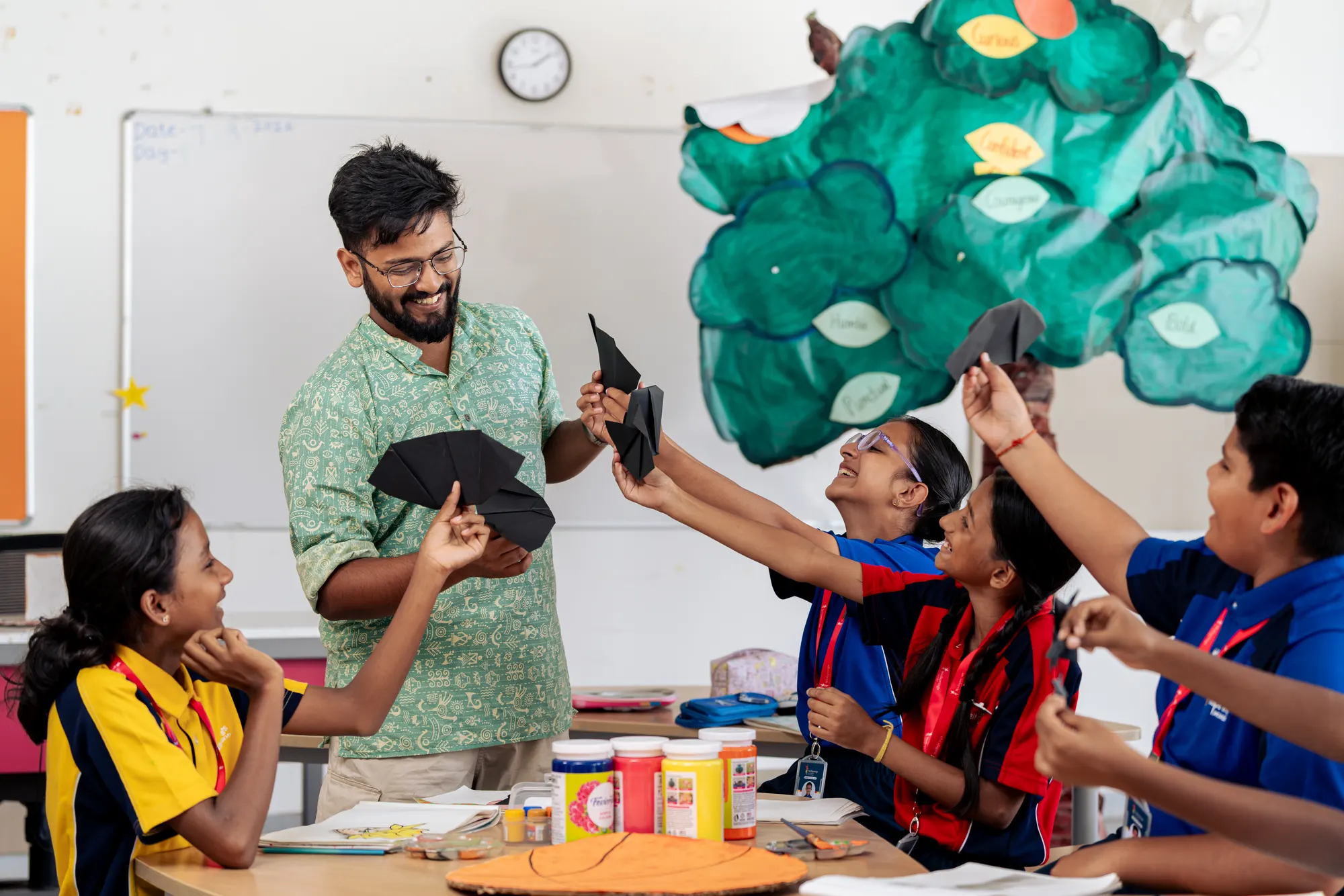
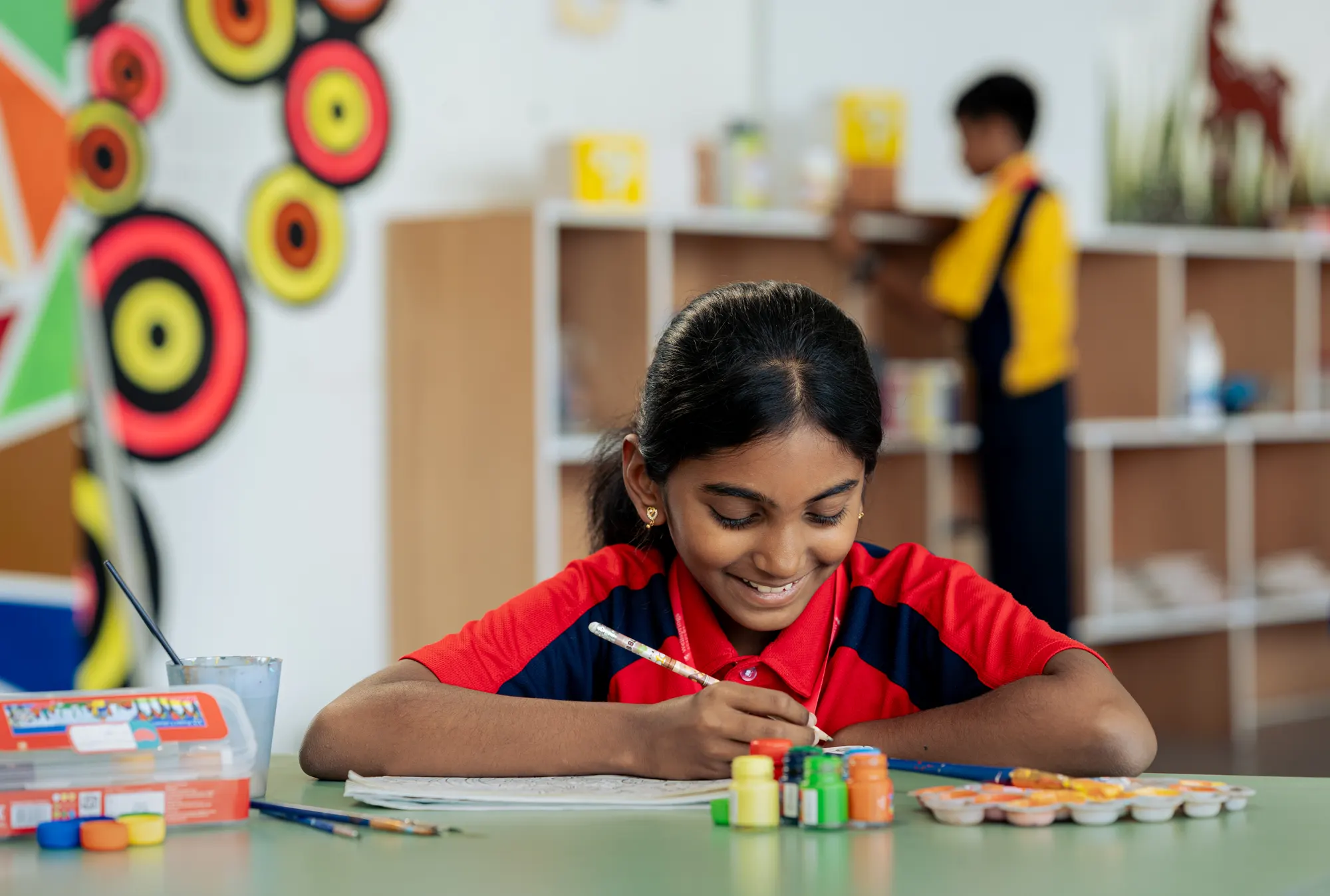
Art & craft
Drawing, painting and making, led by specialists.
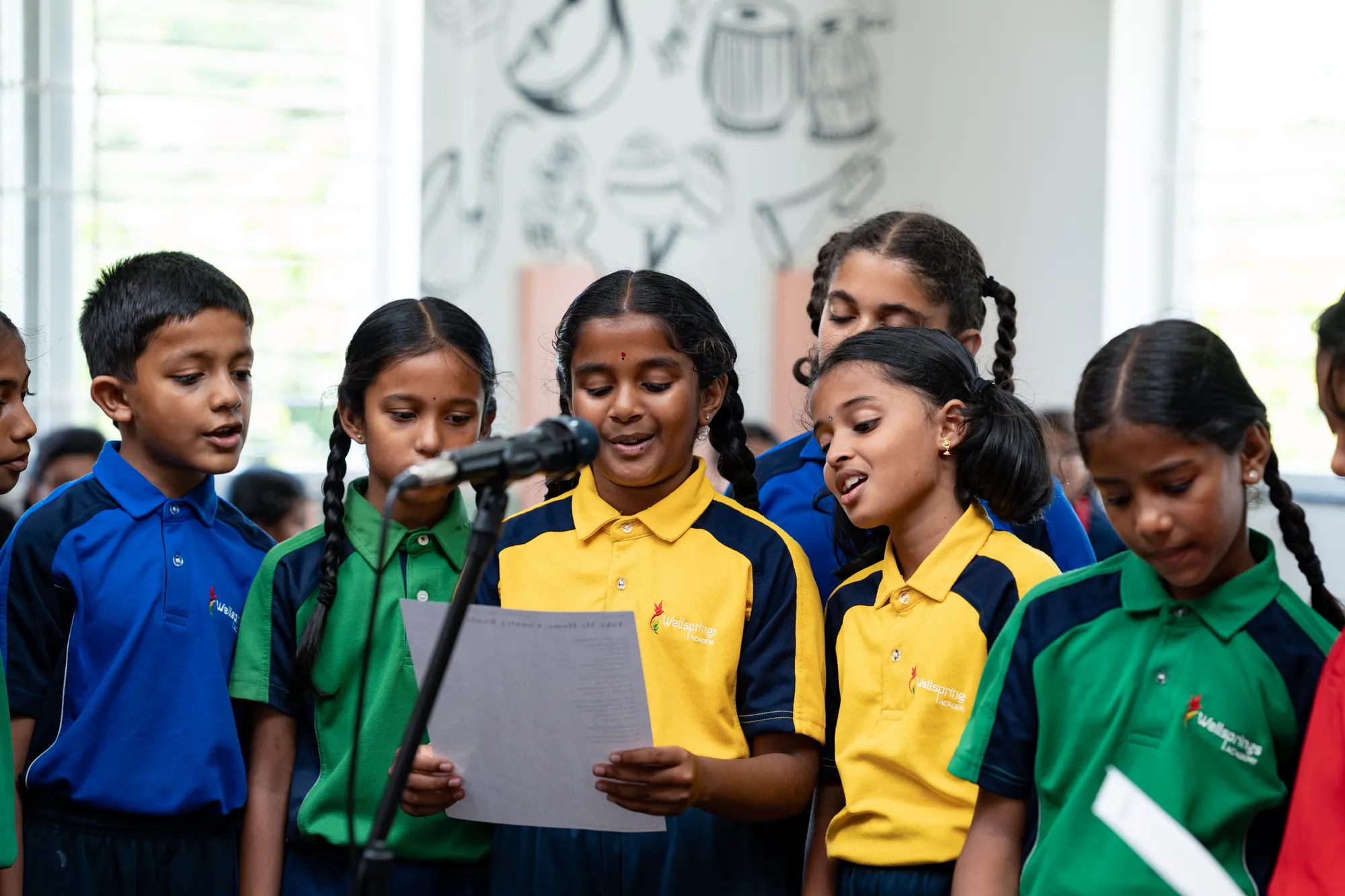
Music — vocal
Singing across many styles, in groups.
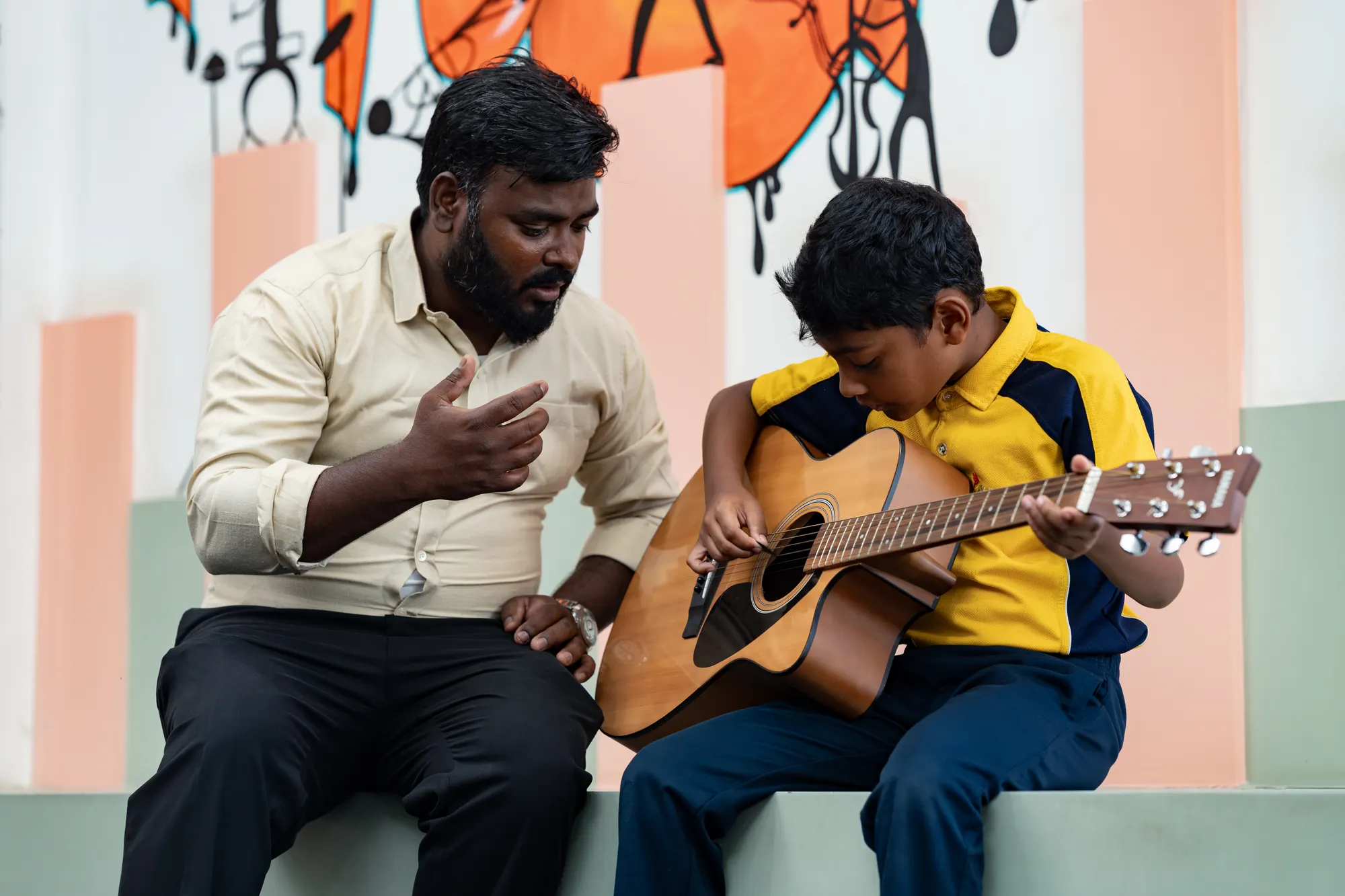
Music — instruments
Keyboard, guitar and drums, in small batches.
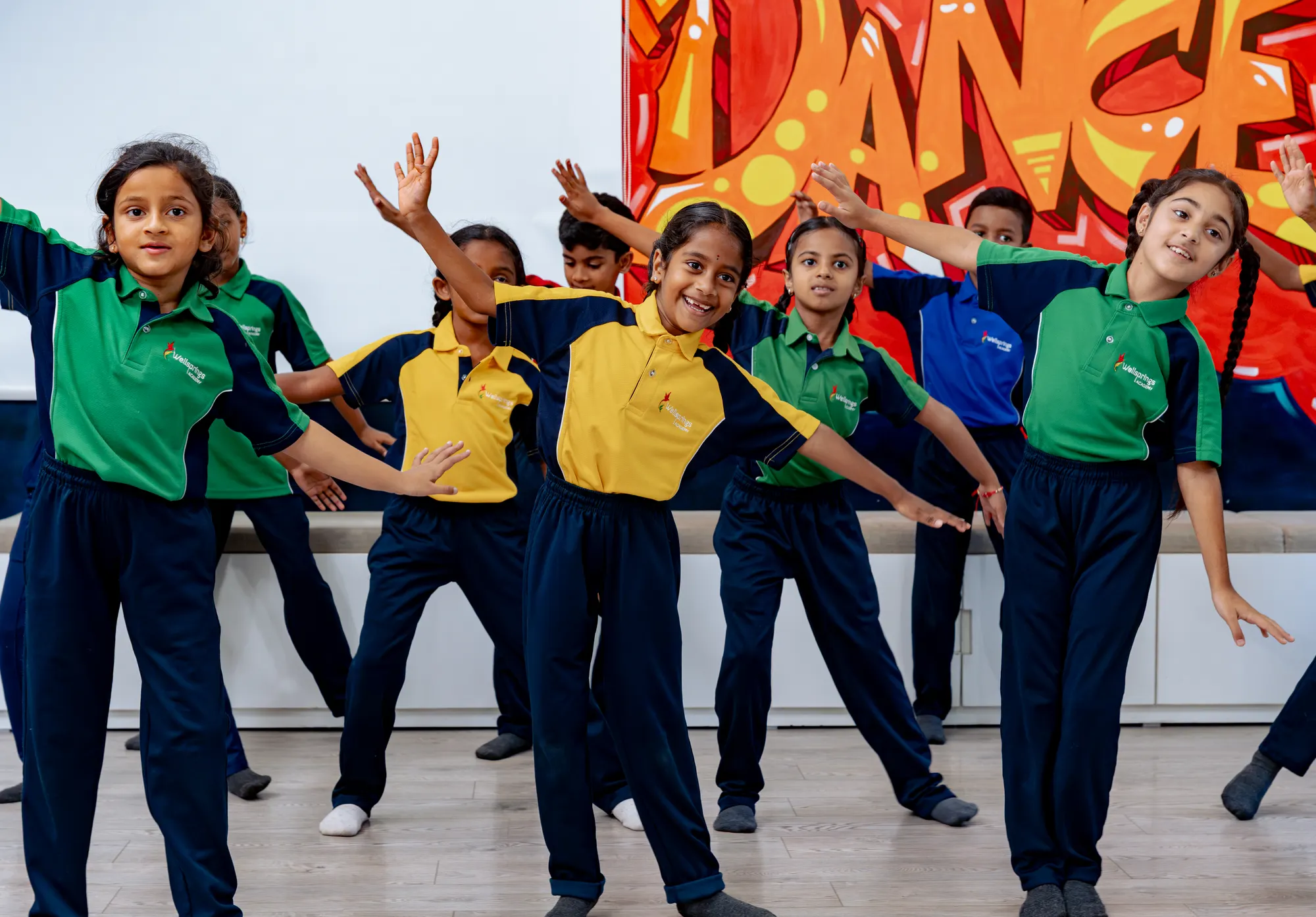
Dance
Freestyle, hip-hop, contemporary, Bollywood, folk.
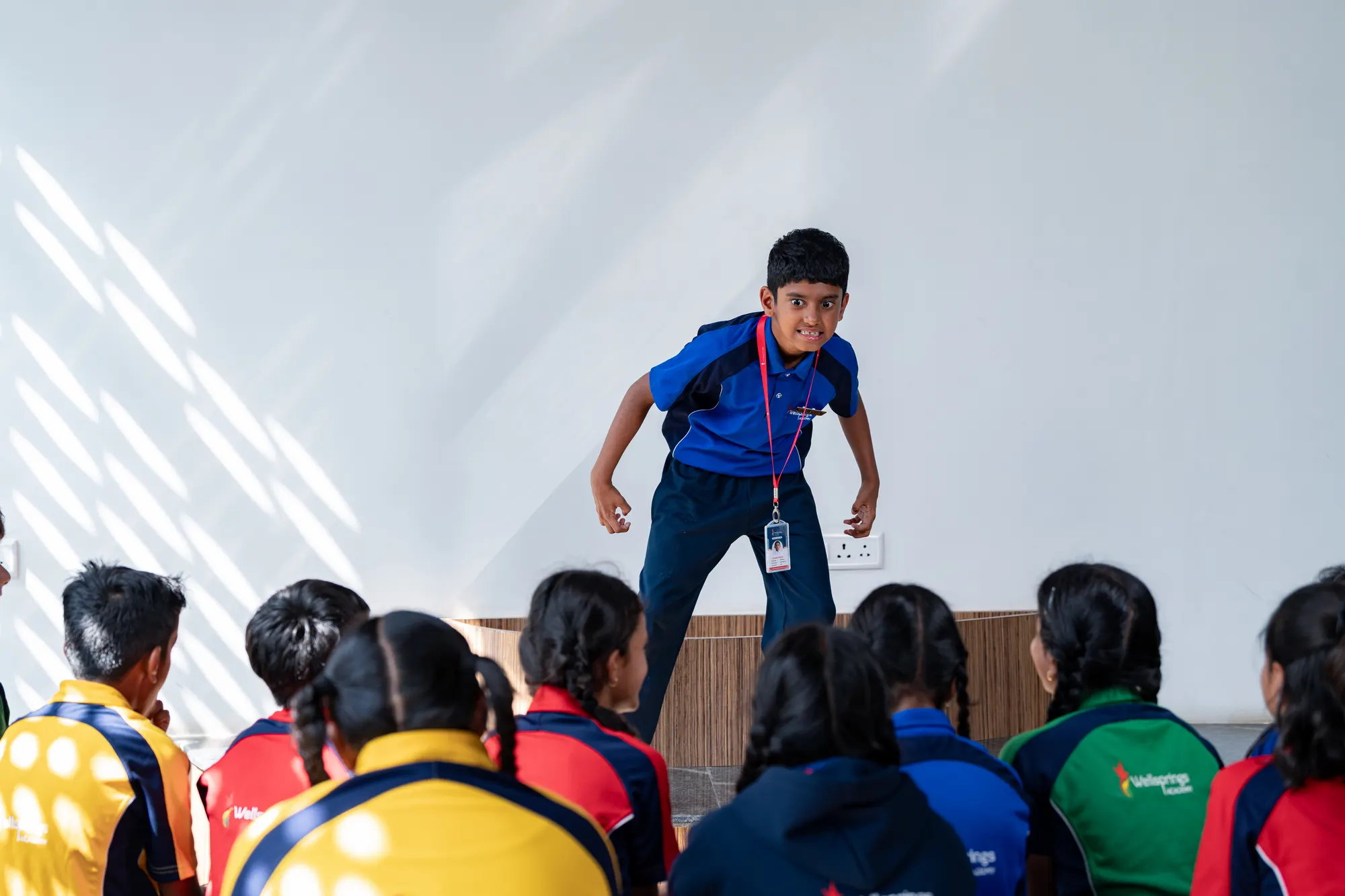
Drama
Navarasa, mime and street play — voice and presence.
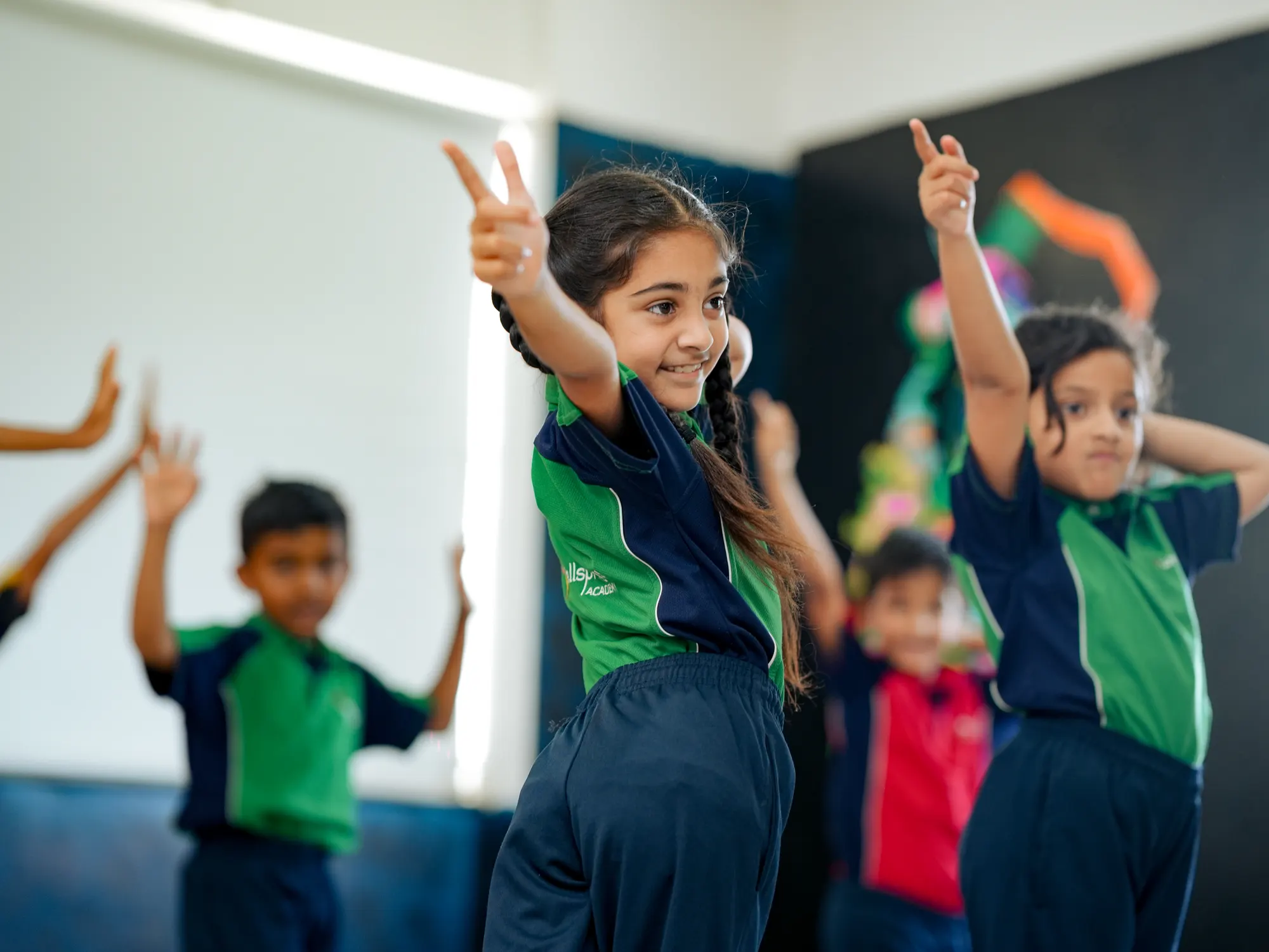
Movement & rhythm
For the youngest — body, beat and balance.
Where it is shown
Most children find the thing they are good at here, and it is rarely the thing anyone predicted.
Confidence is built by doing it often.
Taught through games, not lectures. Children take turns, argue a point, tell a story and stand in front of a group often enough that it stops being frightening.
From
Grade 2
How often
One block a week
Length
80 minutes
Learning by making.
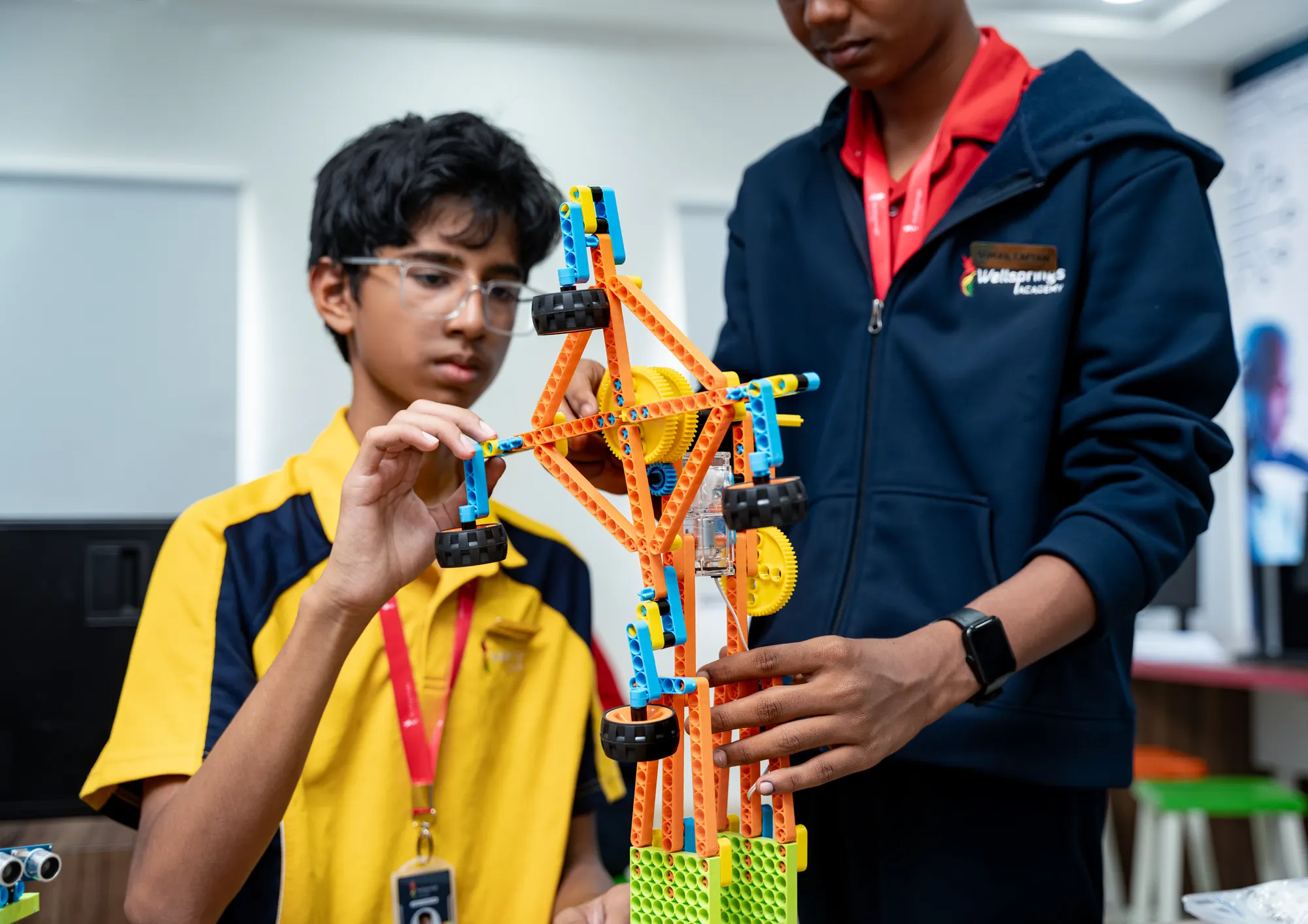
From Grade 1, every child has a STEAM block once a week — designing, building, testing and improving.
From
Grade 1
How often
One block a week
Length
80 minutes
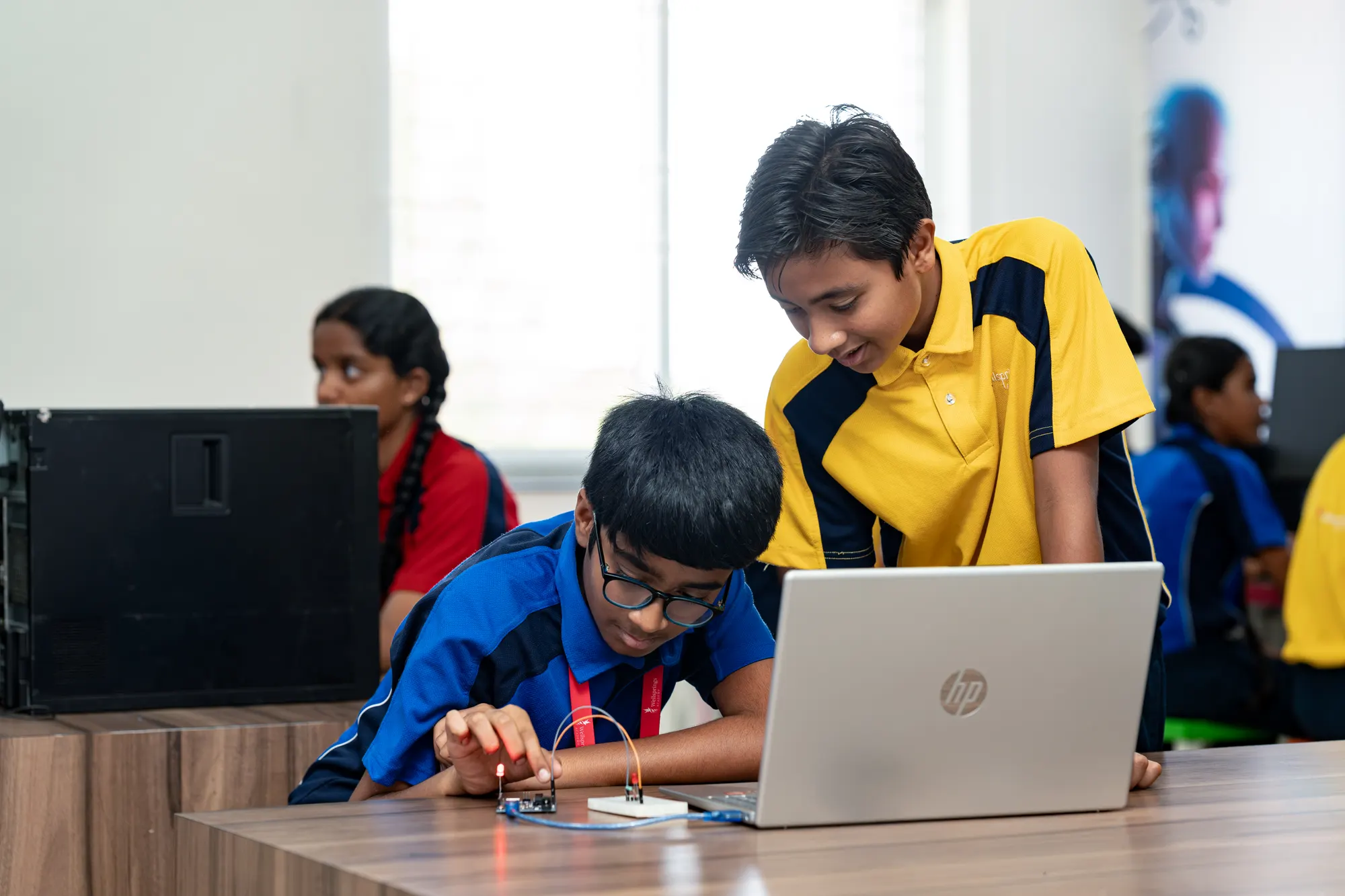
Coding
From blocks to real code, and the thinking behind it.
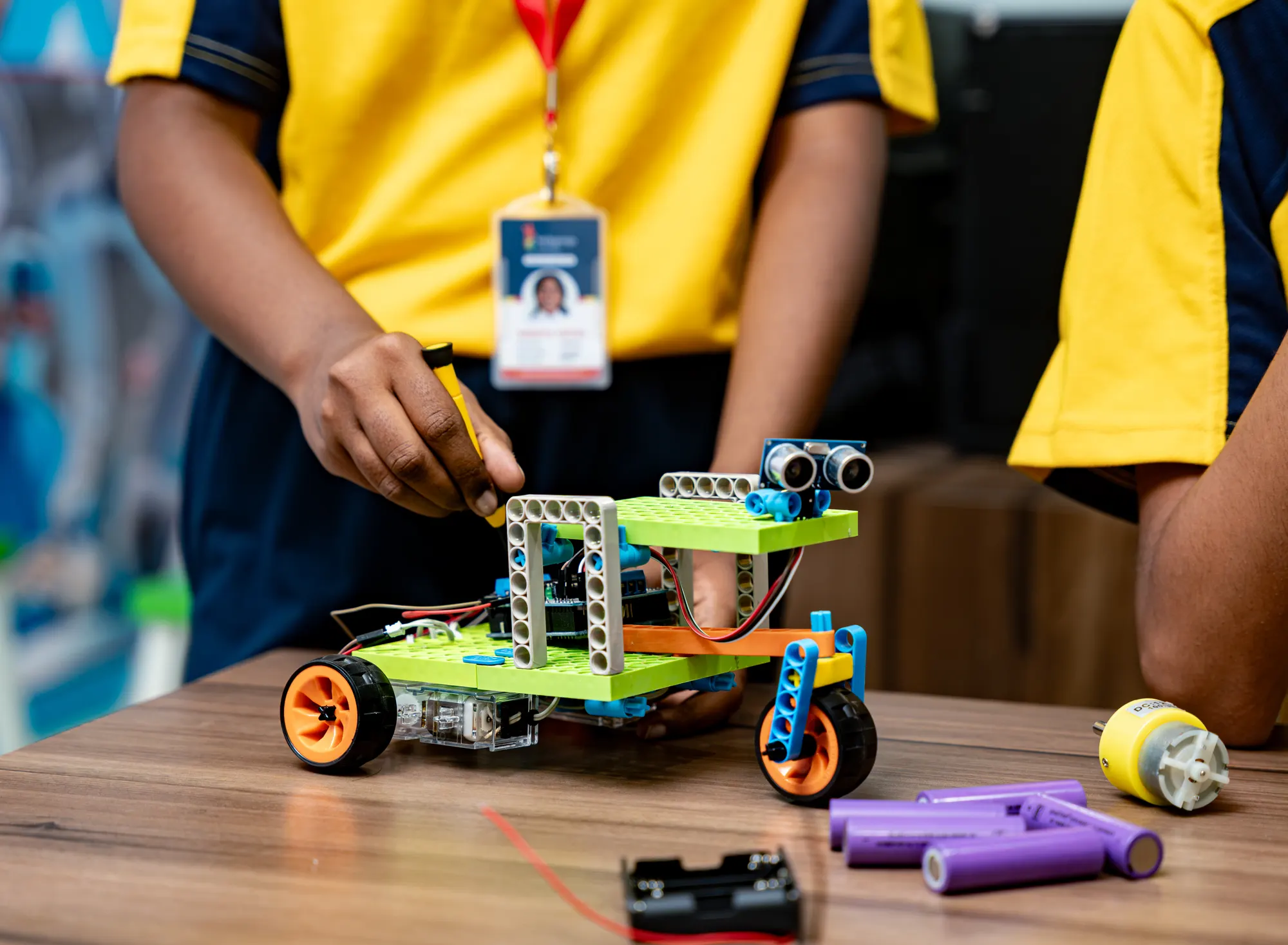
Robotics
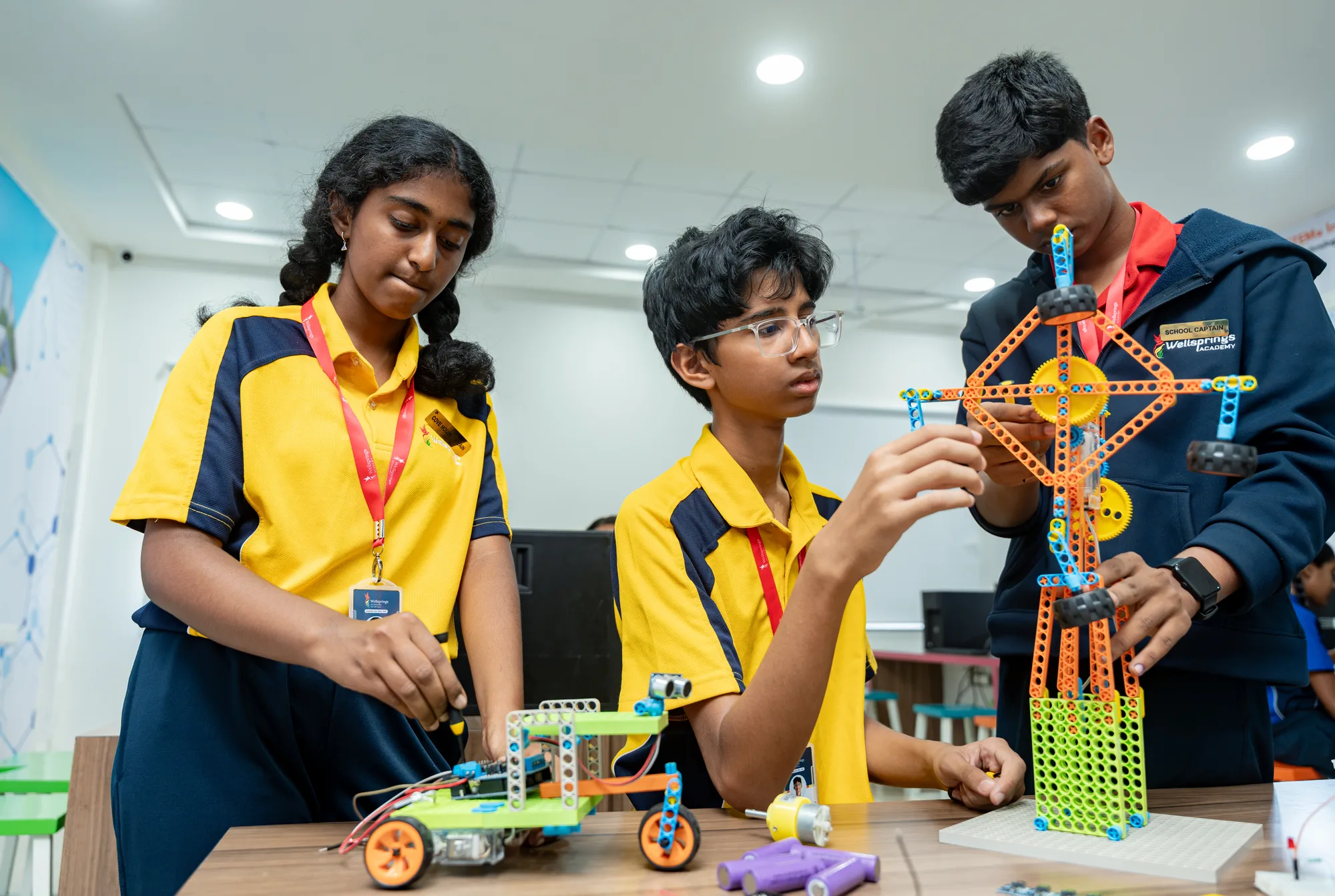
Motors, sensors and machines that do a job.
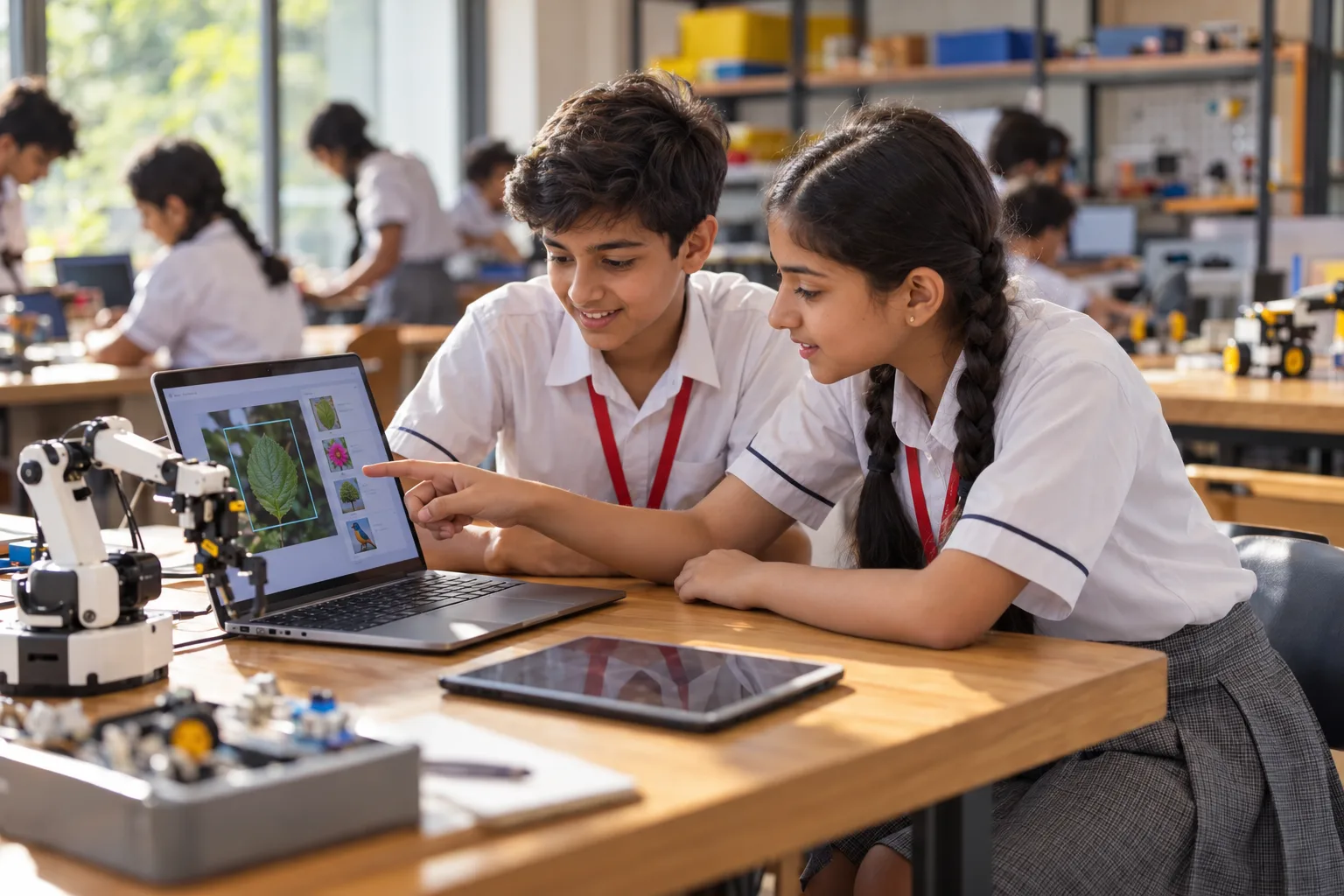
Artificial intelligence
How machines learn, tried out first-hand.
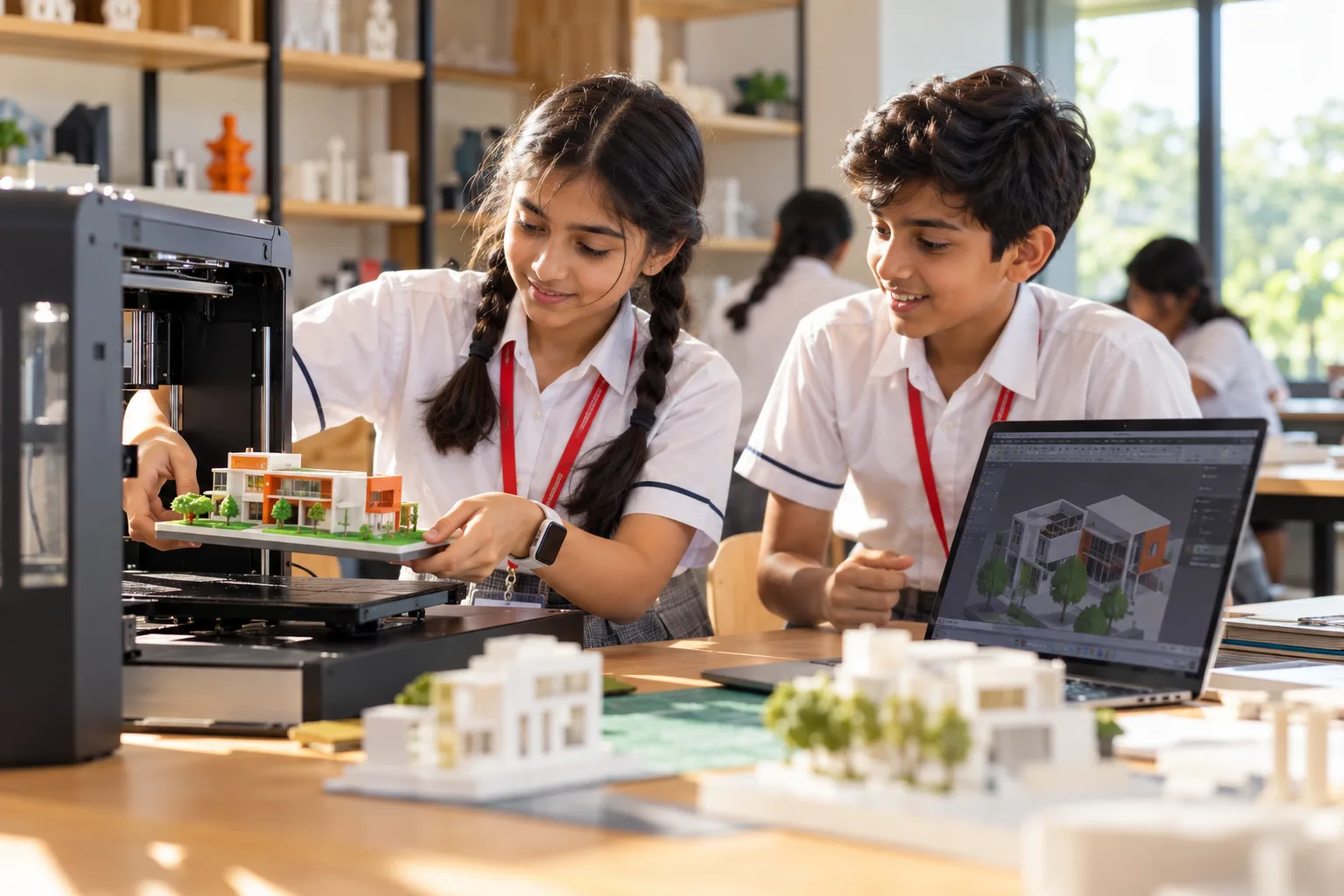
3D design
Drawn on screen, printed and held in the hand.
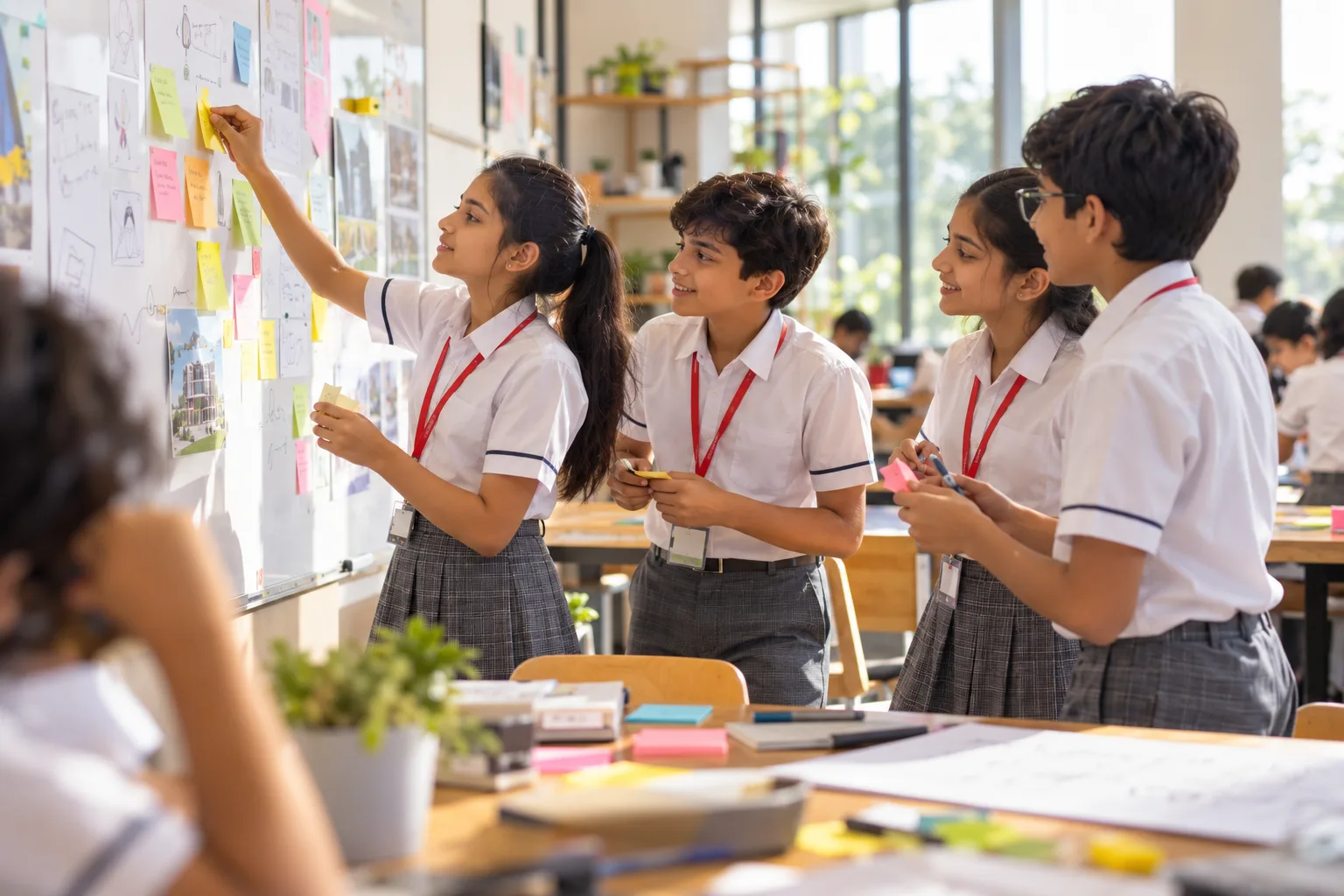
Design thinking
Find the problem before building the answer.
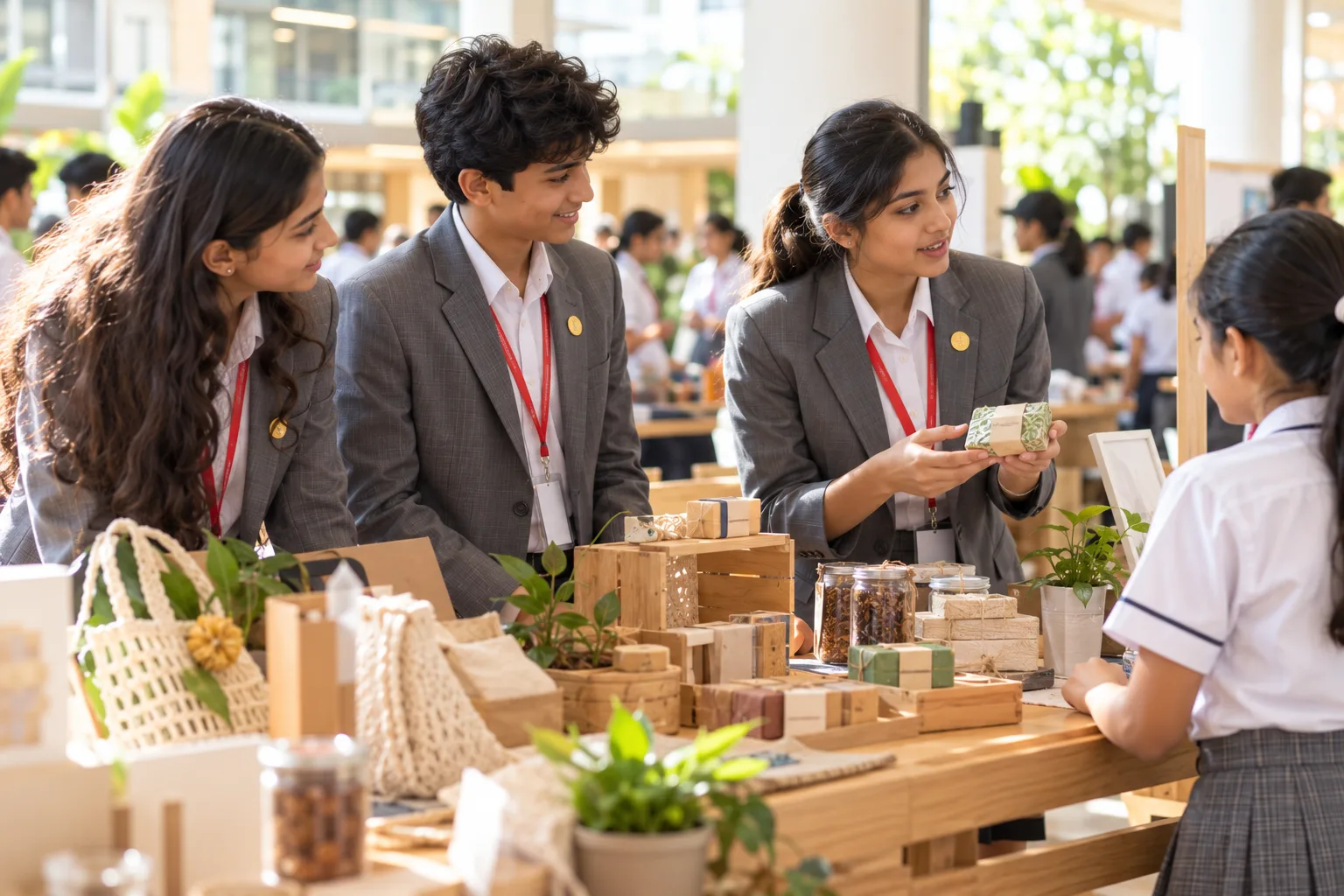
Entrepreneurship
An idea, a price, a customer — and a stall to run.
- 01
Grades 1–2
LEGO construction, simple machines, paper circuits, balancing structures and visual coding.
- 02
Grades 3–5
Hydraulic bridges, earthquake-resistant towers, robotic vehicles, smart city models and basic automation.
- 03
Grade 6 upward
AI applications, robotics challenges, IoT prototypes, 3D-designed models and real product prototypes.
Every block ends the same way
- Design
- Build
- Test
- Improve
- Present
Some of it works. Some of it falls apart, and that usually teaches more.
Real work, with real tools.
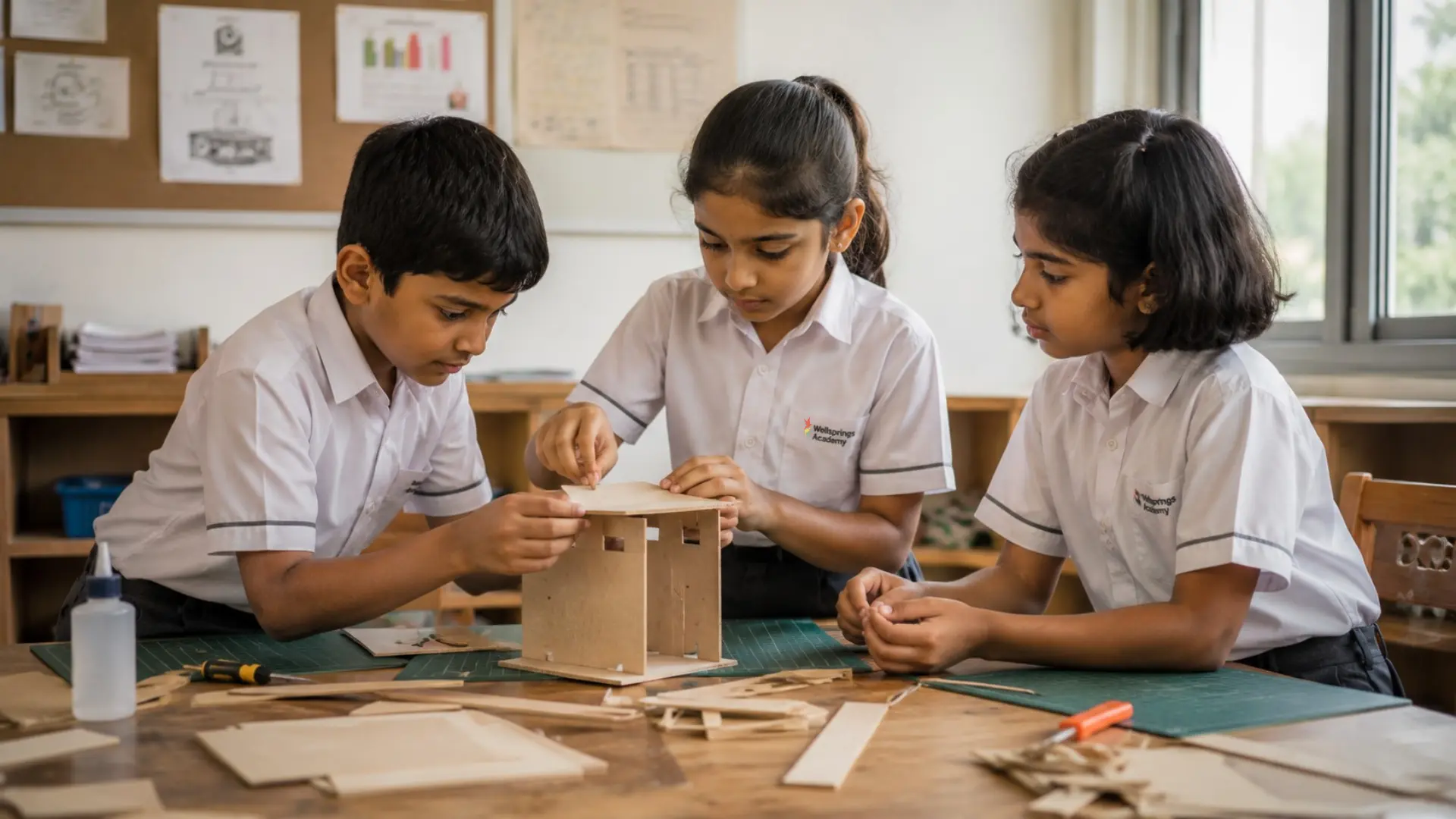
From Grade 6, children take CBSE's vocational skill classes. Each project runs about thirty hours, includes a visit to see the work done for real, and ends with children showing what they made.
- Living things
Growing things
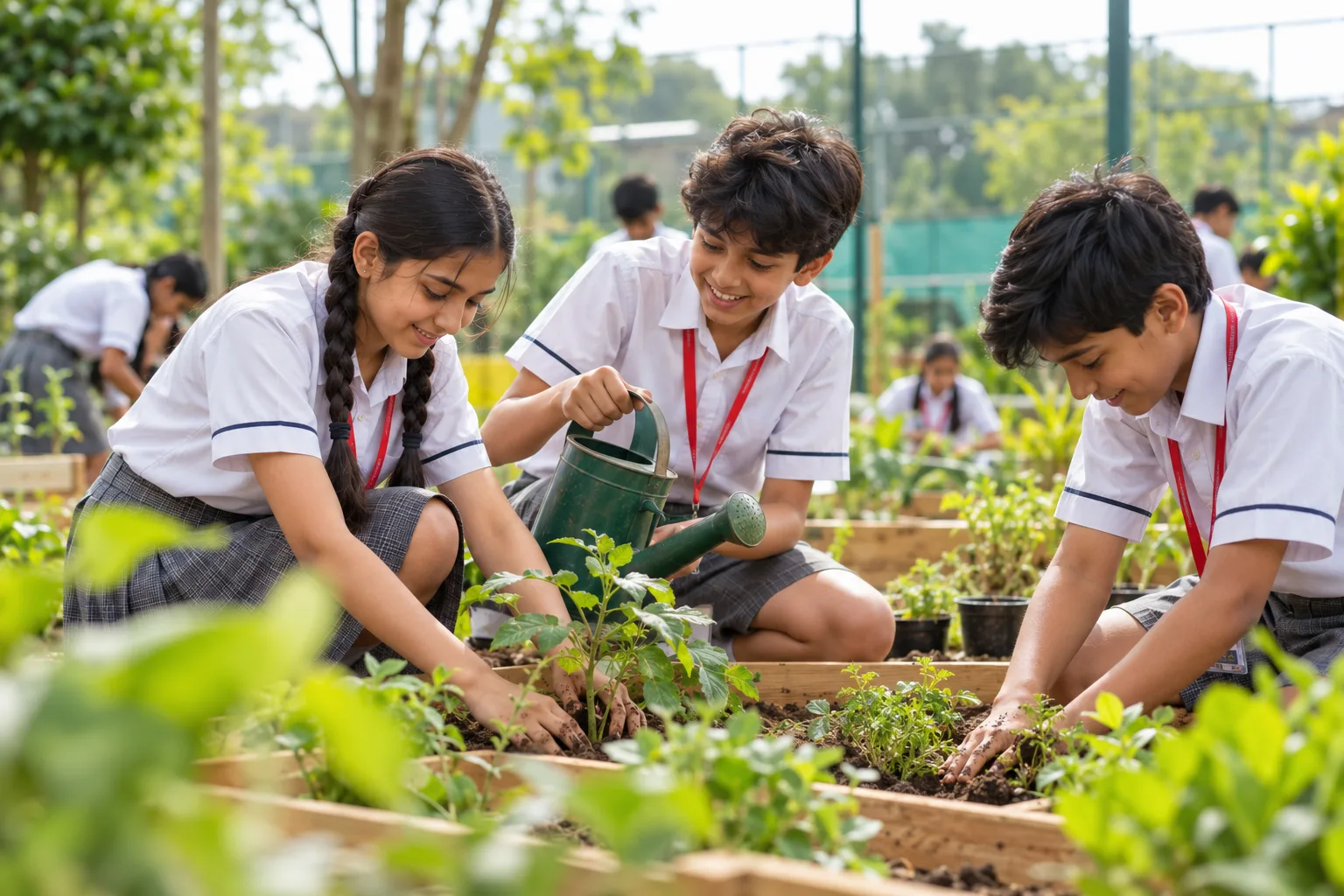
Microgreens without soil — building the system, testing the water, keeping it alive.
- Living things
Caring for animals
Feeding charts, health records, and a visit to see it done properly.
- Machines and materials
Wood and bamboo
Real tools, a finished product, and the school's own broken furniture repaired.
- Machines and materials
Making things work
Breadboards, sensors and circuits — a night light or an alarm that actually works.
- Human services
Auditing water
Surveying what the school uses, reading three months of bills, writing up what should change.
- Human services
Working with a business
Interviewing a shopkeeper nearby, designing a campaign, presenting it back to them.
Most of the marks come from the work itself, not from a written test. That is the point.
Chosen by the children.
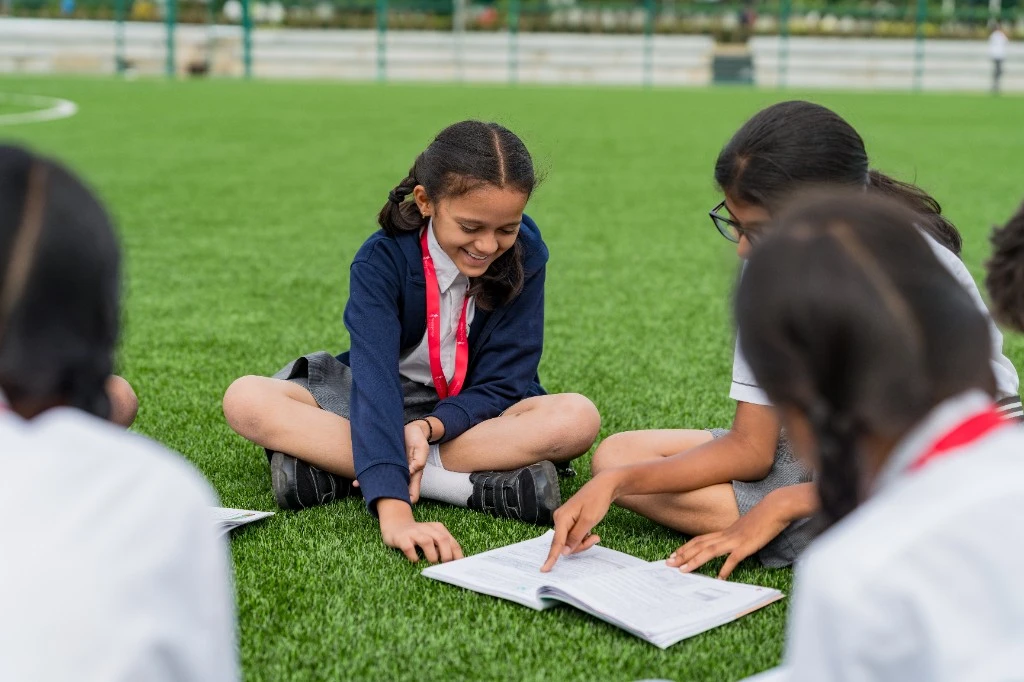
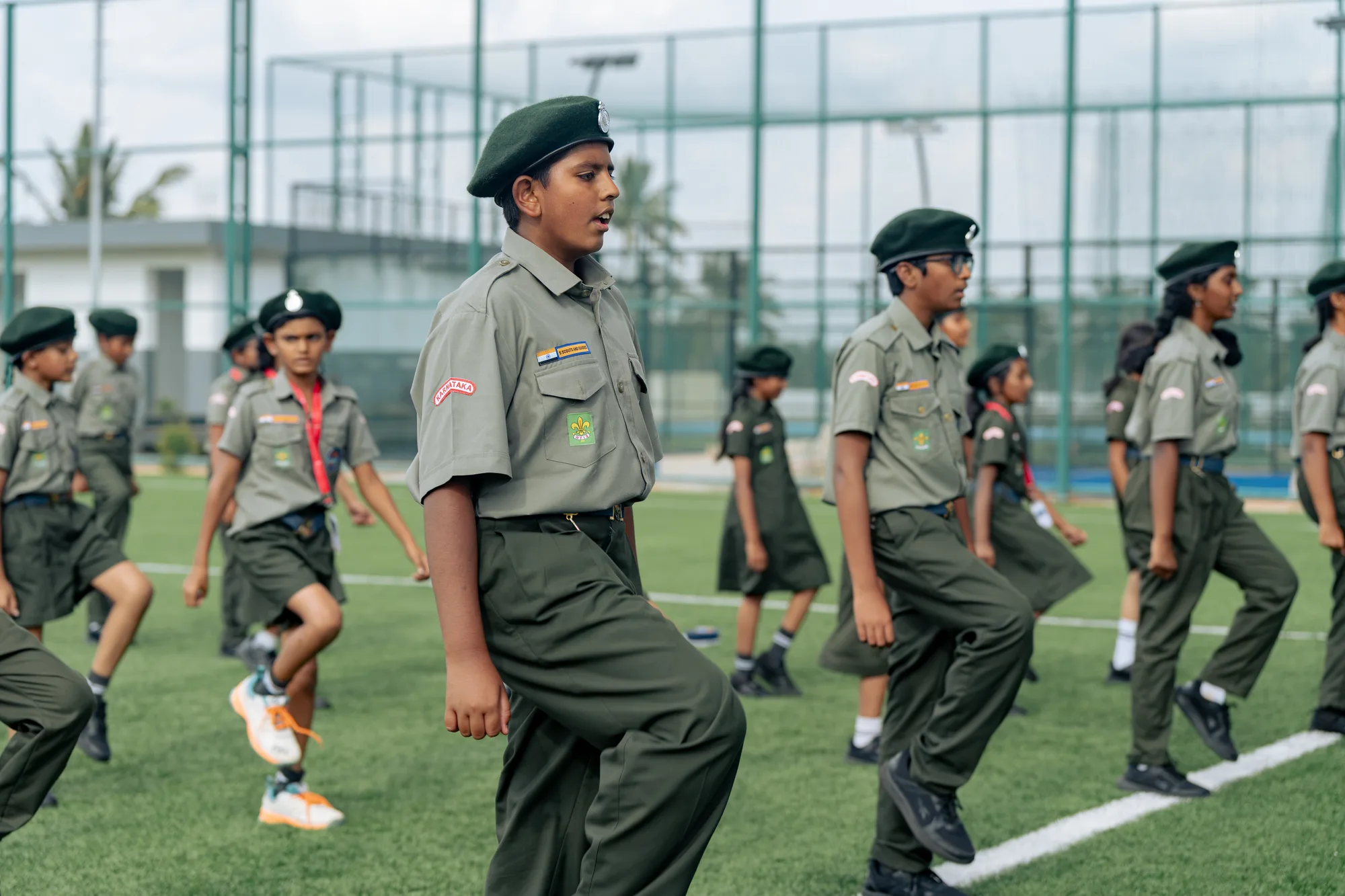
From Grade 3, every child picks a club. It meets once a week, all year, and it is usually where a child finds a first real interest — and the friends who share it.
Club 01 / 05
Literary club
Reads and writes together, and runs the open-mic and debates.
Younger children have circle time, storytelling and free play instead. From Grade 6, clubs give way to the weekly vocational block.