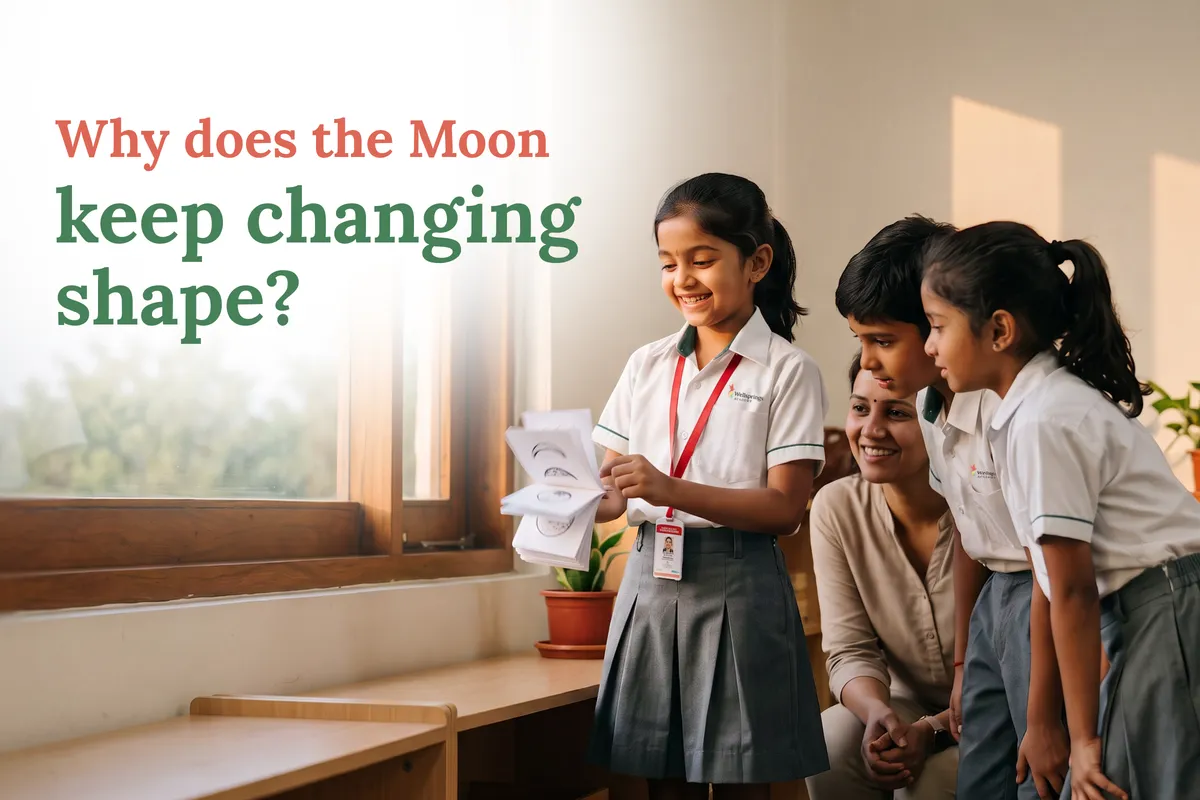
It started at the window. We were ten minutes into an EVS lesson about day and night when Aanya stopped looking at her book and started looking at the sky. "Miss, why is the moon a different shape every time?" She wasn't trying to get out of work. She genuinely wanted to know.
I could have simply told her. Instead, we made flipbooks. Everyone folded a small stack of paper, and over two afternoons we drew the moon on each page: a sliver, then a little more, then full, then back again. Flick the pages with your thumb and a whole month goes by in about ten seconds.
That's when the real arguing started. If the moon makes its own light, one child asked, why is half of it dark? A torch and a cricket ball later, the class had worked out something close to the truth on their own: the moon only shows us the part the sun happens to be lighting up.
On Friday, at pickup, I watched Aanya hold up her flipbook for her younger brother and explain a crescent to him, thumb flicking, completely sure of herself. That's the whole lesson, really. We didn't hand her the answer. We gave her a way to find it, and now it belongs to her.